

Outdoor Equipment

Automotive Exterior

Gardening Tools

Signage

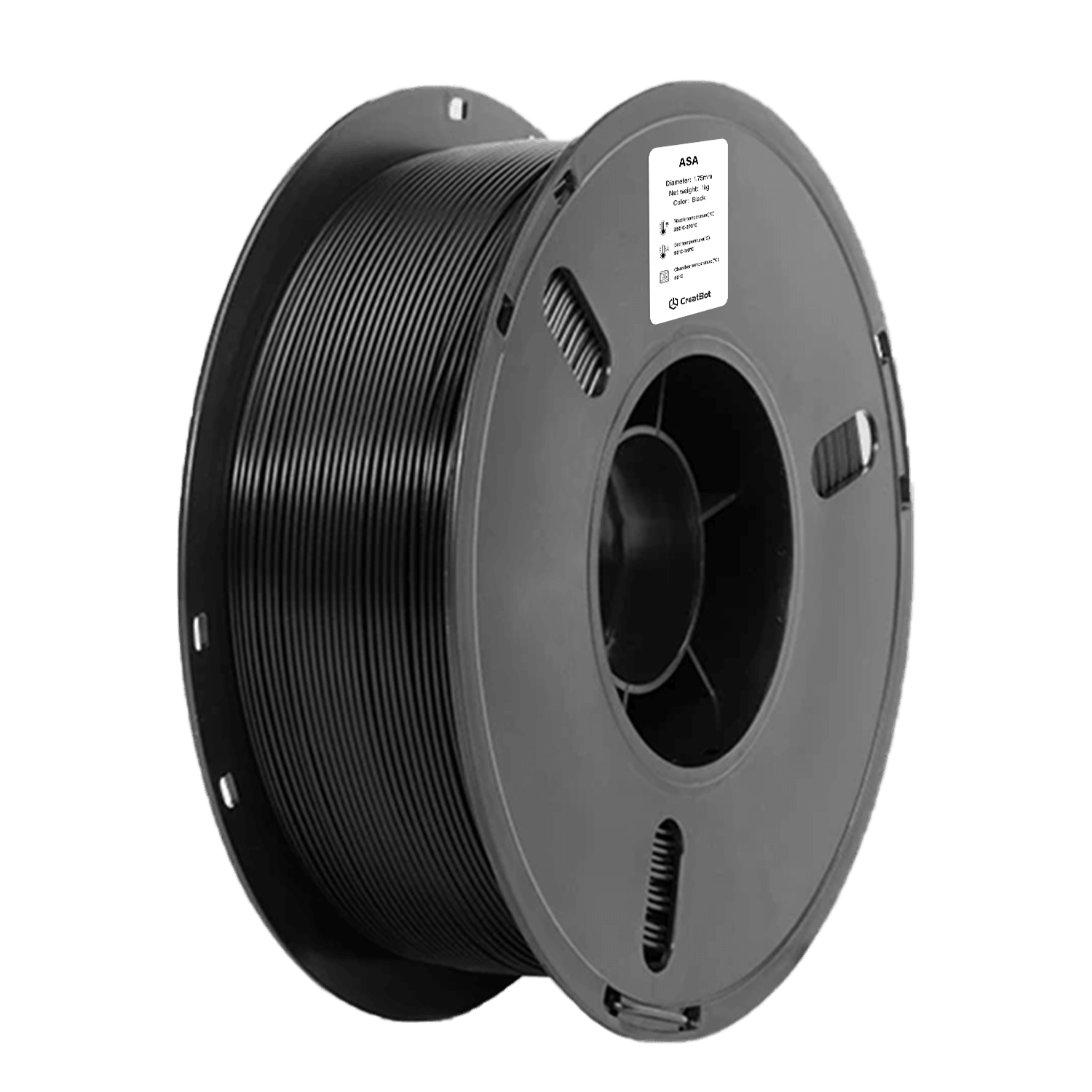
ASA 3D Printing Filament Features

ASA (Acrylonitrile Styrene Acrylate) is a thermoplastic engineering material renowned for its weatherability, copolymerized from acrylonitrile, styrene and acrylate rubber. The unique acrylate rubber phase gives ASA excellent UV and aging resistance while maintaining good mechanical strength and processability similar to ABS, making it an ideal choice for outdoor applications and high-durability scenarios.
Mechanical Properties
Tensile strength 45 MPa, flexural strength 72 MPa, flexural modulus 2100 MPa, with good balance of rigidity and toughness. Notched impact strength is comparable to ABS, resistant to brittle fracture under impact and dynamic loads, suitable for functional parts and structural parts.
Thermal Properties
Glass transition temperature (Tg) approx. 102°C, heat deflection temperature (HDT B) 90°C (0.45MPa). Stable for long-term use below 80°C, short-term heat resistance up to 100°C and above. Good thermal stability ensures it does not deform easily under long-term use in high-temperature outdoor environments.
Chemical & Weather Resistance
Excellent UV resistance, resistant to yellowing, chalking and embrittlement under long-term outdoor exposure. Through artificial weathering tests, it maintains good surface gloss and mechanical properties after 3-5 years of outdoor use, far superior to general engineering plastics such as ABS and PVC.

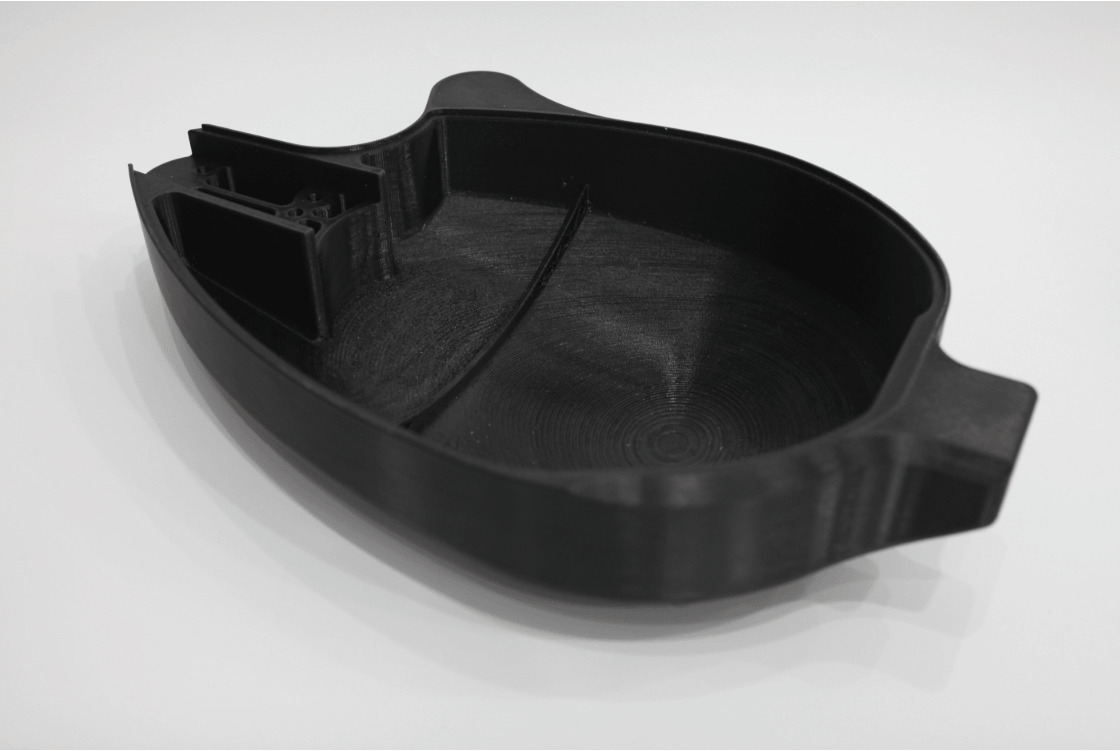
CreatBot ASA Print Preview

CreatBot ASA Print Preview

Advantages of Printing with CreatBot Filaments

Premium Raw Material Quality

Selected virgin ASA resins from top-tier chemical giants, ensuring material purity from the source. Each batch undergoes full inspection of tensile strength, melt index and diameter tolerance before shipment to ensure stable and reliable performance.

Factory-Calibrated, Ready to Print

Filament formulation, melt flow and diameter tolerance (±0.03mm) are calibrated for all CreatBot models, with exclusive parameters built into the slicing software. No need for repeated debugging—unpack and print, even beginners can achieve stable print quality.

Outstanding Outdoor Durability

Optimized for outdoor applications, with outstanding UV resistance, aging resistance and anti-yellowing performance. Printed parts maintain vivid colors and mechanical properties under long-term outdoor use, suitable for automotive exteriors, outdoor equipment housings, gardening tools and other high-durability scenarios.

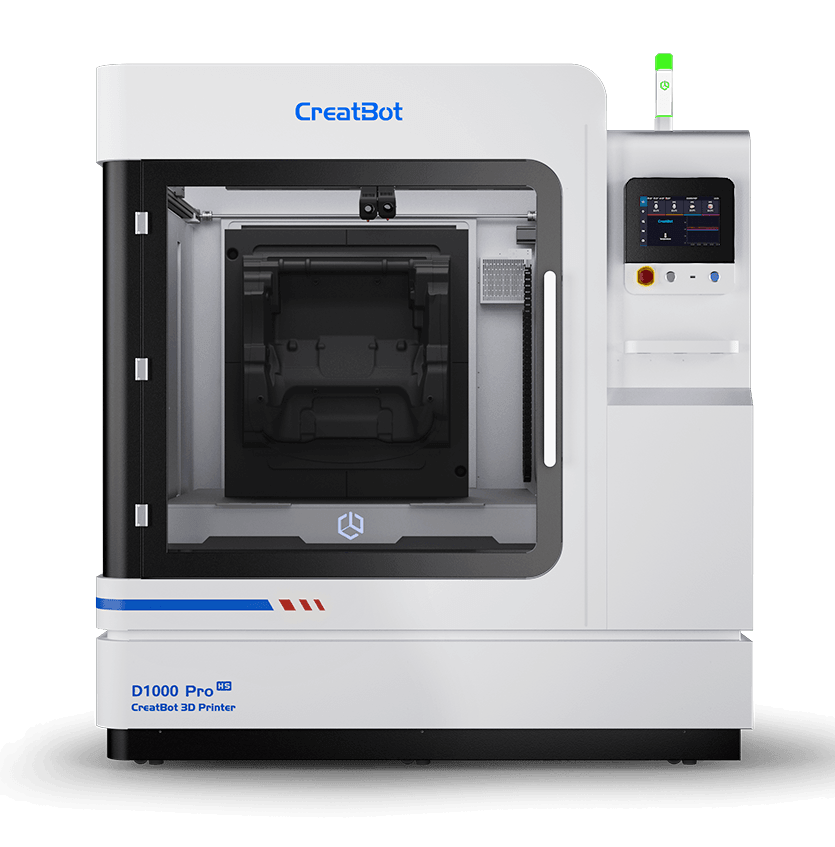
対応3Dプリンター

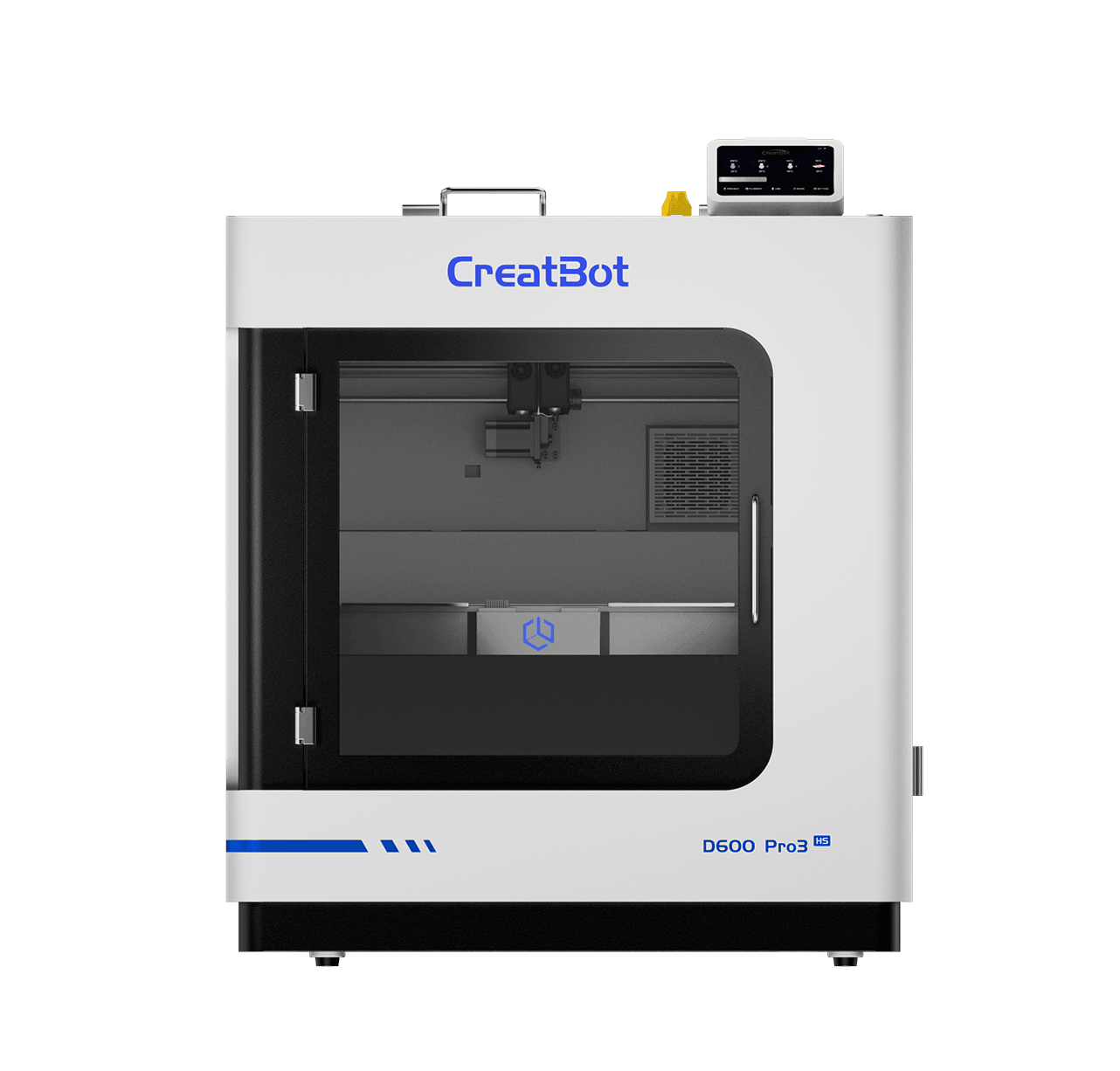
CreatBot工業用3Dプリンターは高性能材料向けに設計されています。以下の機種は加熱チャンバーと高温ノズルを搭載し、プロ仕様の結果を提供します。
TECHNICAL DATA SHEET

Physical PropertiesTest StandardTypical Value
DensityISO11831.07g/cm³
Mechanical PropertiesTest StandardTypical Value
Tensile StrengthISO52738MPa
Tensile ModulusISO5272350MPa
Flexural StrengthISO17865MPa
Flexural ModulusISO1782399MPa
Thermal PropertiesTest StandardTypical Value
Heat Deflection Temperature
(at 0.45MPa)
ISO7590℃
Glass Transition TemperatureISO 306101℃

ASA Filament FAQ

Is CreatBot ASA filament compatible with other brands of 3D printers?

CreatBot ASA uses standard 1.75mm filament with industrial-grade ±0.03mm diameter tolerance control, compatible with the vast majority of FDM 3D printers that support ASA printing. The equipment must have a heated print bed (recommended 90-110°C) and an extrusion system capable of stably reaching 240-260°C. It should be noted that ASA is prone to warping or interlayer cracking due to ambient temperature fluctuations during printing, so it is recommended to use an enclosed printing chamber or protective cover. Although compatibility is broad, for optimal print quality and stability, we strongly recommend using CreatBot ASA with CreatBot industrial-grade 3D printers, whose enclosed heated chamber and exclusive slicing parameters can fully leverage the performance advantages of CreatBot ASA filament.

What is the difference between ASA and ABS? What scenarios is ASA suitable for?

ASA and ABS both belong to the styrene family of engineering plastics with similar mechanical properties, but ASA has an overwhelming advantage in weatherability. The differences are: ① Weatherability—ASA uses acrylate rubber to replace the butadiene rubber phase in ABS, with UV resistance, anti-yellowing and anti-chalking capabilities significantly superior to ABS. It maintains performance after 3-5 years of outdoor exposure, while ABS noticeably yellows and becomes brittle after 1-2 years outdoors; ② Heat resistance—both have similar Tg (approx. 100-105°C), and ASA's HDT (approx. 90°C) is slightly higher than ABS (approx. 78°C); ③ Mechanical properties—both have similar tensile, flexural and impact strengths, with ASA having slightly better toughness; ④ Printability—ASA has similar shrinkage to ABS and also requires an enclosed chamber and heated bed. ASA is suitable for outdoor equipment housings, automotive exterior parts, gardening tools, signage, outdoor electrical enclosures and other scenarios requiring long-term weatherability; if only used for indoor functional parts, ABS is more cost-effective.

What is the recommended printing temperature for ASA? Any tuning suggestions?

The recommended nozzle temperature for CreatBot ASA is 240-260°C, and the bed temperature is 90-110°C. Specific temperature settings should be adjusted according to model size, layer height, print speed and equipment environment. Tuning suggestions: ① For the first layer, appropriately increase nozzle temperature by 5-10°C and reduce print speed to 20-30mm/s to enhance first layer adhesion; ② For large-area models, set bed temperature to 100-110°C and add brim (skirt) around the print edges to reduce warping; ③ When using an enclosed chamber or temperature-controlled box, maintain chamber temperature at 40-60°C to significantly reduce interlayer thermal stress and cracking risk; ④ For small or fine models, appropriately lower nozzle temperature to 240-245°C to improve detail performance, while large structural parts are recommended at 250-255°C to ensure interlayer bonding strength. It is recommended to print a temperature tower first for calibration to find the optimal temperature window for the current environment.

What types of models and application scenarios is ASA suitable for?

With its excellent weatherability, good mechanical properties and high-temperature resistance, ASA is widely used in multiple fields. Typical applications include: ① Outdoor equipment housings—sensor housings, outdoor monitoring equipment, weather station housings, etc., resistant to yellowing and embrittlement under long-term exposure to sunlight and rain; ② Automotive exterior parts—rearview mirror housings, air intake grilles, emblem bases, fenders and other non-structural parts, with UV resistance meeting vehicle outdoor service life requirements; ③ Gardening tools and equipment—flower pots, watering can handles, gardening brackets, etc., resistant to moisture and UV; ④ Signage—outdoor billboards, road signs, door plates, direction signs, etc., maintaining vivid colors long-term; ⑤ Outdoor electrical enclosures—garden lights, outdoor socket boxes, solar equipment housings, etc.; ⑥ Marine and ocean equipment parts—resistant to salt spray and UV, suitable for coastal environments.

How should CreatBot ASA filament be properly stored? How to handle moisture absorption?

ASA has lower hygroscopicity than nylon (PA) but higher than ABS. Long-term exposure to humid environments will still absorb moisture from the air, causing bubbles, stringing, rough surfaces and decreased mechanical properties during printing. Proper storage: ① Unopened filament should be stored in a cool, dry place (temperature 15-25°C, humidity < 30%), away from direct sunlight; ② Opened filament is recommended to be sealed in bags with desiccant (silica gel desiccant, recommended dosage 5-10g/roll), or stored in a filament dry box maintaining 10-20% relative humidity; ③ When not in use for short periods (more than 3 days), it is recommended to remove the filament from the printer and seal it. If moisture is found (obvious bubble sounds during printing, white surface on filament or rough extrudate), it can be dried in a hot air oven at 70-80°C for 4-6 hours (note: temperature should not exceed 85°C to avoid filament deformation and sticking), then placed in a dry environment to cool to room temperature before normal use.

Is an enclosed printing chamber required for ASA printing? Why?

Although CreatBot ASA can theoretically be printed on open-frame printers, we strongly recommend using an enclosed or semi-enclosed printing chamber for optimal results. The reasons are as follows: ASA has a glass transition temperature of approximately 102°C and heat deflection temperature of approximately 90°C. During printing, thermal shrinkage stress from each layer accumulates layer by layer. If ambient temperature fluctuates significantly (such as open-frame printers affected by air conditioning and airflow), interlayer thermal stress can cause model edge warping, cracking or even detachment from the print bed. An enclosed chamber can stabilize ambient temperature at 40-60°C, significantly reducing thermal shrinkage stress and increasing print success rate for large models (over 15cm) from less than 50% to over 90%. For industrial large-format printing (such as CreatBot /D600 Pro3 HS series), equipment with a heated constant-temperature chamber is a key condition for ensuring print quality. If only an open-frame printer is available, it is recommended to reduce warping risk by installing acrylic protective covers around the printer, using anti-warping glue or PEI flexible steel plates, and increasing brim width.

TOP
© CreatBot 2026 すべての権利を保有 v7.0