
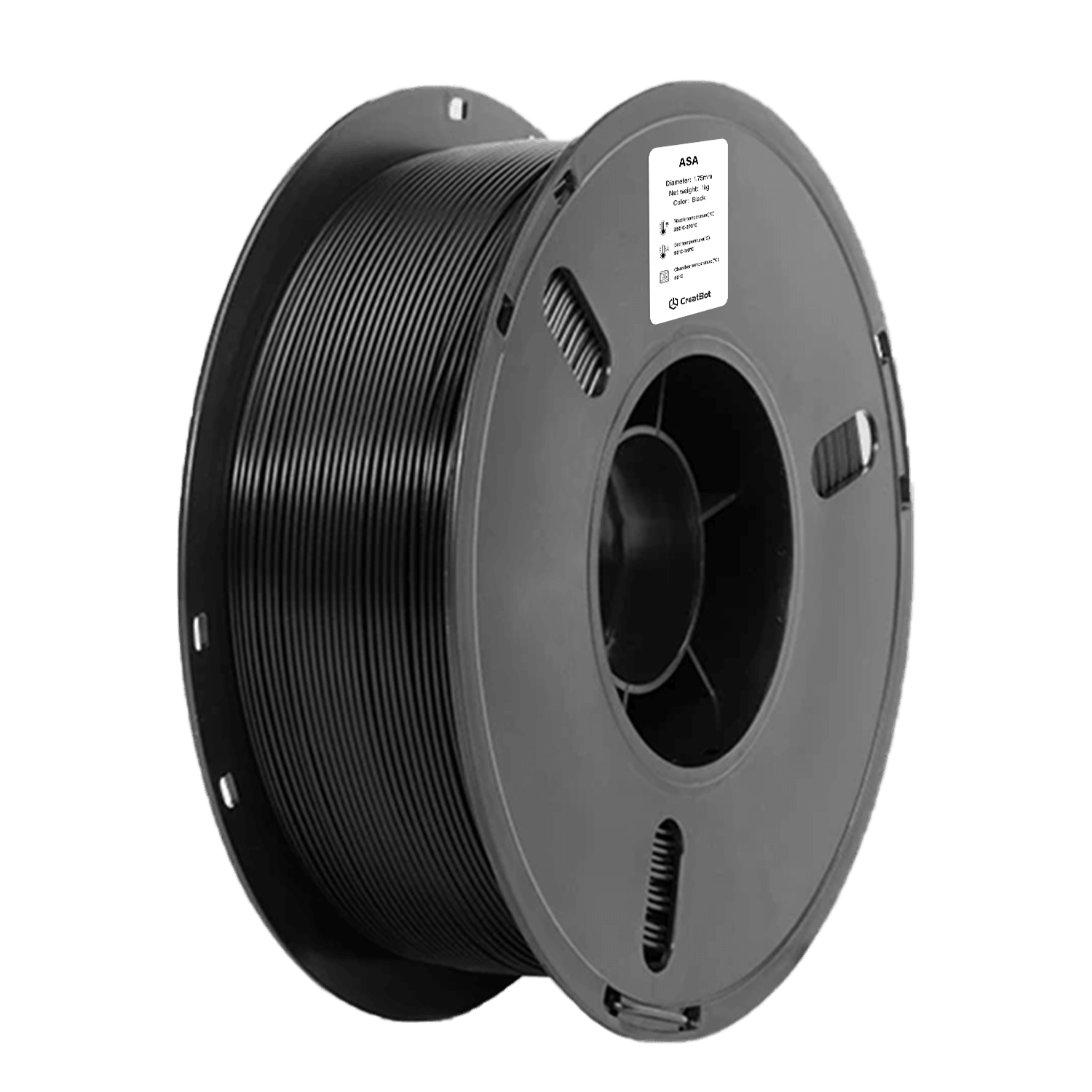
ASA

Attrezzatura outdoor

Esterno automobilistico

Attrezzi da giardinaggio

Segnaletica
Caratteristiche del filamento ASA per stampa 3D



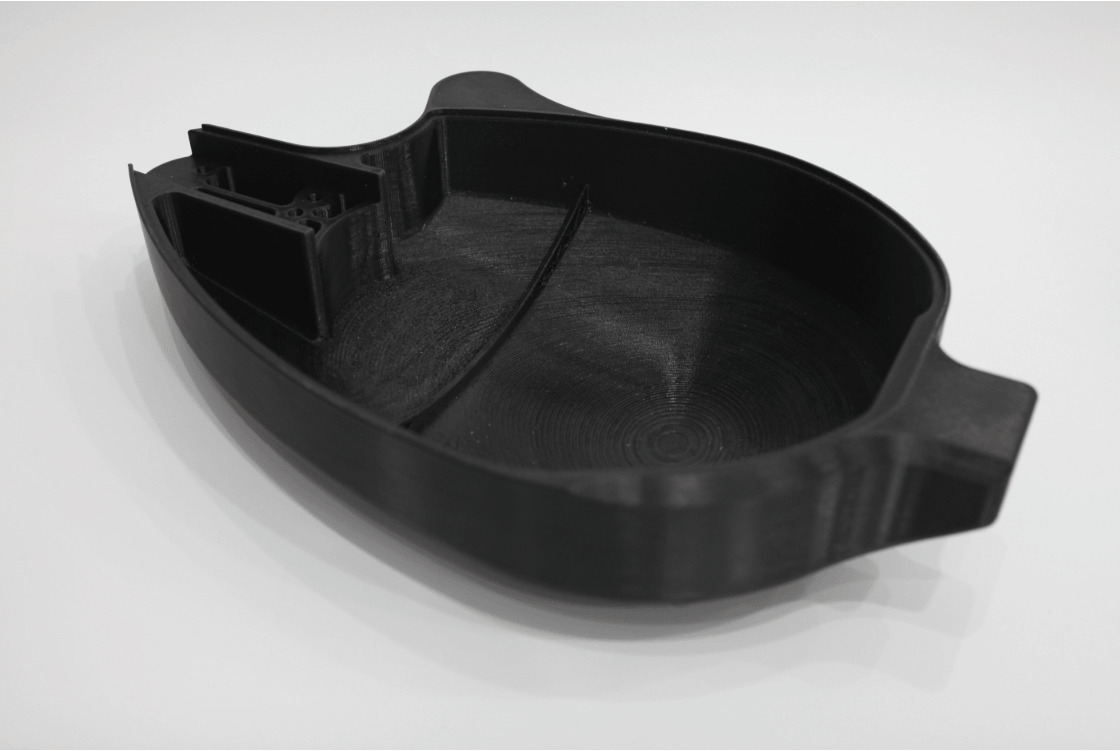
Anteprima di stampa CreatBot ASA
Vantaggi della stampa con filamenti CreatBot
Qualità premium delle materie prime
Resine ASA vergini selezionate da giganti chimici di primo livello, garantendo la purezza del materiale dalla fonte. Ogni lotto viene sottoposto a ispezione completa di resistenza alla trazione, indice di fusione e tolleranza diametrale prima della spedizione per garantire prestazioni stabili e affidabili.
Calibrazione di fabbrica, pronto per la stampa
La formulazione del filamento, il flusso di fusione e la tolleranza diametrale (±0.03mm) sono calibrati per tutti i modelli CreatBot, con parametri esclusivi integrati nel software di slicing. Non è necessario eseguire debug ripetuti: disimballare e stampare, anche i principianti possono ottenere una qualità di stampa stabile.
Durabilità outdoor eccezionale
Ottimizzato per applicazioni outdoor, con eccellente resistenza UV, resistenza all'invecchiamento e prestazioni anti-ingiallimento. Le parti stampate mantengono colori vividi e proprietà meccaniche in caso di uso prolungato all'aperto, adatte a esterni automobilistici, carcasse di attrezzature outdoor, attrezzi da giardinaggio e altri scenari ad alta durabilità.
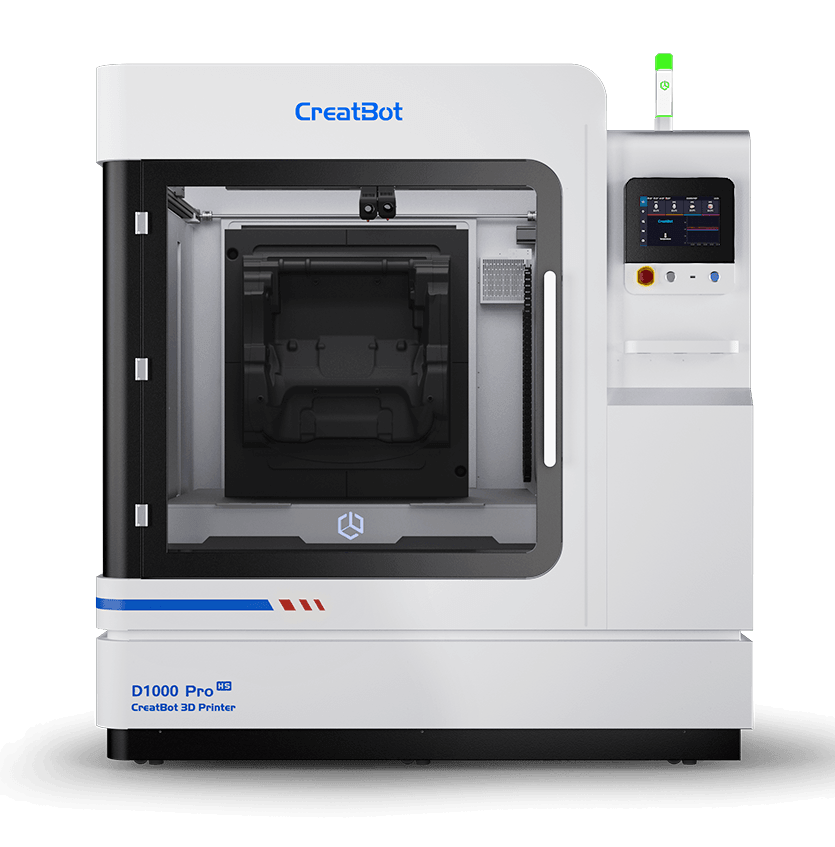
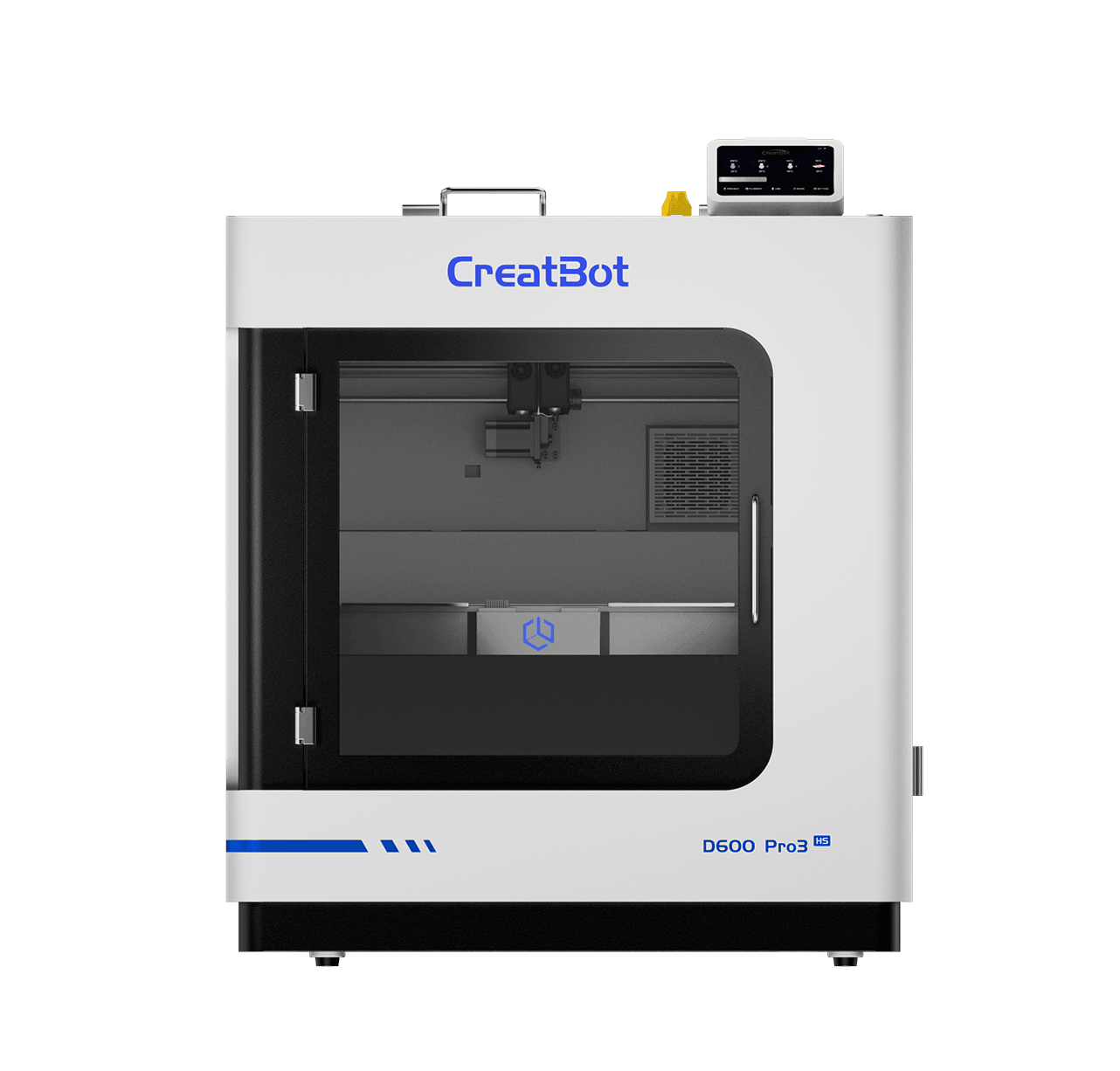
Stampanti 3D Compatibili
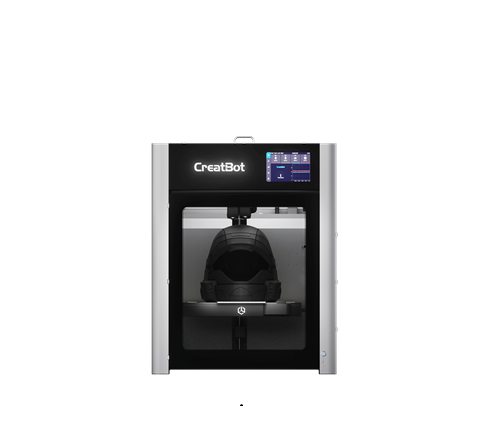
Le stampanti 3D industriali CreatBot sono progettate per materiali ad alte prestazioni. I seguenti modelli dispongono di camera riscaldata e ugelli ad alta temperatura per risultati professionali.
SCHEDA TECNICA
| Elemento | Dato |
|---|---|
| Condizioni di essiccazione pre-stampa | 70-80℃, 6-8 H (Stufa di essiccazione a convezione) |
| Temperatura del nozzle | 240-260℃ |
| Diametro del nozzle | 0,4 / 0,6 / 0,8 / 1,0 mm |
| Trattamento superficiale del piano di stampa | Spray per stampa 3D / colla solida PVP / adesivo specializzato |
| Temperatura del piano | 100-110℃ |
| Temperatura della camera | 60-80℃ |
| Ventola di raffreddamento | 0-30% |
| Velocità di stampa | 30-120 mm/s |
| Proprietà fisiche | Metodo di prova | Dato |
|---|---|---|
| Densità | ISO1183 | 1.07g/cm³ |
| Assorbimento acqua di saturazione | 25°C, 55%RH | / |
| Indice di fusione | 250°C, 2.16 kg | 5.6g/10 min |
| Temperatura di fusione | ISO 11357 | 98°C |
| Temperatura di rammollimento Vicat | ISO 306, GB/T 1633 | 101°C |
| Temperatura di deformazione termica | ISO 75, 0.45MPa | 90°C |
| Proprietà meccaniche | Metodo di prova | Dato |
|---|---|---|
| Resistenza alla trazione XY | ISO 527, GB/T 1040 | 38 MPa |
| Resistenza alla trazione Z | ISO 527, GB/T 1040 | / |
| Modulo di Young XY | ISO 527, GB/T 1040 | 2350 MPa |
| Modulo di Young Z | ISO 527, GB/T 1040 | / |
| Allungamento a rottura XY | ISO 527, GB/T 1040 | 5.2% |
| Allungamento a rottura Z | ISO 527, GB/T 1040 | / |
| Resistenza a flessione XY | ISO 178, GB/T 9341 | 65 MPa |
| Resistenza a flessione Z | ISO 178, GB/T 9341 | / |
| Modulo flessionale XY | ISO 178, GB/T 9341 | 2399 MPa |
| Modulo flessionale Z | ISO 178, GB/T 9341 | / |
| Resistenza all'urto XY | ISO 179, GB/T 1043 | 12.9 kJ/m² |
| Resistenza all'urto Z | ISO 179, GB/T 1043 | / |
FAQ sul filamento ASA
Il CreatBot ASA utilizza filamento standard da 1.75mm con controllo industriale di tolleranza diametrale di ±0.03mm, compatibile con la grande maggioranza delle stampanti 3D FDM che supportano la stampa ASA. L'apparecchiatura deve avere un piano di stampa riscaldato (consigliato 90-110℃) e un sistema di estrusione in grado di raggiungere stabilmente 240-260℃. È importante notare che l'ASA è soggetto a deformazioni o crepe interlayer a causa delle fluttuazioni della temperatura ambiente durante la stampa, pertanto si consiglia di utilizzare una camera di stampa chiusa o una copertura protettiva. Sebbene la compatibilità sia ampia, per una qualità e stabilità di stampa ottimali consigliamo vivamente di utilizzare il CreatBot ASA con stampanti 3D industriali CreatBot, la cui camera riscaldata chiusa e parametri di slicing esclusivi possono sfruttare appieno i vantaggi prestazionali del filamento CreatBot ASA.
Sia ASA che ABS appartengono alla famiglia dello stirene delle plastiche tecniche con proprietà meccaniche simili, ma l'ASA ha un vantaggio schiacciante in termini di resistenza alle intemperie. Le differenze sono: ① Resistenza alle intemperie: l'ASA utilizza gomma acrilica per sostituire la fase di gomma butadienica nell'ABS, con capacità di resistenza UV, anti-ingiallimento e anti-farinazione significativamente superiori all'ABS. Mantiene le prestazioni dopo 3-5 anni di esposizione outdoor, mentre l'ABS diventa visibilmente giallo e fragile dopo 1-2 anni all'aperto; ② Resistenza al calore: entrambi hanno Tg simili (appross. 100-105℃), e l'HDT dell'ASA (appross. 90℃) è leggermente superiore a quello dell'ABS (appross. 78℃); ③ Proprietà meccaniche: entrambi hanno resistenze a trazione, flessione e urto simili, con l'ASA leggermente più tenace; ④ Stampabilità: l'ASA ha un ritiro simile all'ABS e richiede anch'esso camera chiusa e piano riscaldato. L'ASA è adatto a carcasse di attrezzature outdoor, parti esterne automobilistiche, attrezzi da giardinaggio, segnaletica, contenitori elettrici outdoor e altri scenari che richiedono resistenza alle intemperie a lungo termine; se utilizzato solo per parti funzionali interne, l'ABS è più economico.
La temperatura del nozzle consigliata per il CreatBot ASA è 240-260℃, e la temperatura del piano è 90-110℃. Le impostazioni di temperatura specifiche devono essere regolate in base alle dimensioni del modello, all'altezza del layer, alla velocità di stampa e all'ambiente dell'apparecchiatura. Suggerimenti di regolazione: ① Per il primo layer, aumentare la temperatura del nozzle di 5-10℃ e ridurre la velocità di stampa a 20-30mm/s per migliorare l'adesione del primo layer; ② Per modelli di grandi dimensioni, impostare la temperatura del piano a 100-110℃ e aggiungere un brim (skirt) intorno ai bordi di stampa per ridurre le deformazioni; ③ Utilizzando una camera chiusa o una scatola a temperatura controllata, mantenere la temperatura della camera a 40-60℃ per ridurre significativamente lo stress termico interlayer e il rischio di crepe; ④ Per modelli piccoli o sottili, ridurre la temperatura del nozzle a 240-245℃ per migliorare il dettaglio, mentre per grandi parti strutturali si consiglia 250-255℃ per garantire la resistenza di adesione interlayer. Si consiglia di stampare prima una torre delle temperature per calibrare e trovare la finestra di temperatura ottimale per l'ambiente attuale.
Grazie alla sua eccellente resistenza alle intemperie, alle buone proprietà meccaniche e alla resistenza alle alte temperature, l'ASA è ampiamente utilizzato in molteplici campi. Le applicazioni tipiche includono: ① Carcasse di attrezzature outdoor: carcasse di sensori, apparecchiature di monitoraggio outdoor, carcasse di stazioni meteorologiche, ecc., resistenti all'ingiallimento e alla fragilità in seguito a esposizione prolungata a sole e pioggia; ② Parti esterne automobilistiche: carcasse di specchietti retrovisori, griglie di aspirazione aria, basi di emblemi, parafanghi e altre parti non strutturali, con resistenza UV conforme ai requisiti di vita utile esterna del veicolo; ③ Attrezzi e attrezzature da giardinaggio: vasi, manici di annaffiatoi, supporti per giardinaggio, ecc., resistenti all'umidità e ai UV; ④ Segnaletica: cartelloni pubblicitari outdoor, segnali stradali, targhette per porte, segnaletica direzionale, ecc., che mantengono colori vividi a lungo termine; ⑤ Contenitori elettrici outdoor: luci da giardino, scatole di prese esterne, carcasse di apparecchiature solari, ecc.; ⑥ Parti di equipaggiamento marino e oceanico: resistenti alla nebbia salina e ai UV, adatte ad ambienti costieri.
L'ASA è meno igroscopico del nylon (PA) ma più dell'ABS. L'esposizione prolungata ad ambienti umidi assorbirà comunque umidità dall'aria, causando bolle, filamenti, superfici ruvide e proprietà meccaniche ridotte durante la stampa. Conservazione corretta: ① Il filamento non aperto deve essere conservato in un luogo fresco e asciutto (temperatura 15-25℃, umidità < 30%), al riparo dalla luce solare diretta; ② Il filamento aperto è consigliato sigillare in sacchetti con essicante (essicante al gel di silice, dosaggio consigliato 5-10g/rotolo) o conservare in una scatola asciutta per filamenti mantenendo un'umidità relativa del 10-20%; ③ Quando non utilizzato per brevi periodi (più di 3 giorni), si consiglia di rimuovere il filamento dalla stampante e sigillarlo. Se viene rilevata umidità (rumori di bolle evidenti durante la stampa, superficie bianca sul filamento o estrudato ruvido), può essere essiccato in un forno ad aria calda a 70-80℃ per 4-6 ore (nota: la temperatura non deve superare 85℃ per evitare deformazioni e incollaggio del filamento), quindi lasciato raffreddare a temperatura ambiente in un ambiente asciutto prima dell'uso normale.
Sebbene teoricamente il CreatBot ASA possa essere stampato su stampanti a telaio aperto, consigliamo vivamente di utilizzare una camera di stampa chiusa o semichiusa per risultati ottimali. I motivi sono i seguenti: l'ASA ha una temperatura di transizione vetrosa di circa 102℃ e una temperatura di deformazione termica di circa 90℃. Durante la stampa, lo stress di ritiro termico di ogni layer si accumula layer dopo layer. Se la temperatura ambiente fluttua significativamente (come nelle stampanti a telaio aperto influenzate da aria condizionata e correnti d'aria), lo stress termico interlayer può causare deformazioni dei bordi, crepe o persino distacco dal piano di stampa. Una camera chiusa può stabilizzare la temperatura ambiente a 40-60℃, ridurre significativamente lo stress di ritiro termico e aumentare il tasso di successo di stampa di modelli grandi (oltre 15cm) da meno del 50% a più del 90%. Per la stampa industriale di grande formato (come la serie CreatBot /D600 Pro3 HS), un equipaggiamento con camera a temperatura costante riscaldata è una condizione chiave per garantire la qualità di stampa. Se è disponibile solo una stampante a telaio aperto, si consiglia di ridurre il rischio di deformazione installando coperture protettive in acrilico attorno alla stampante, utilizzando colla anti-deformazione o piastre in acciaio flessibile PEI, e aumentando la larghezza del brim.
Altri Materiali
Contattaci


Messaggio
Campi di Applicazione
Link rapidi
