
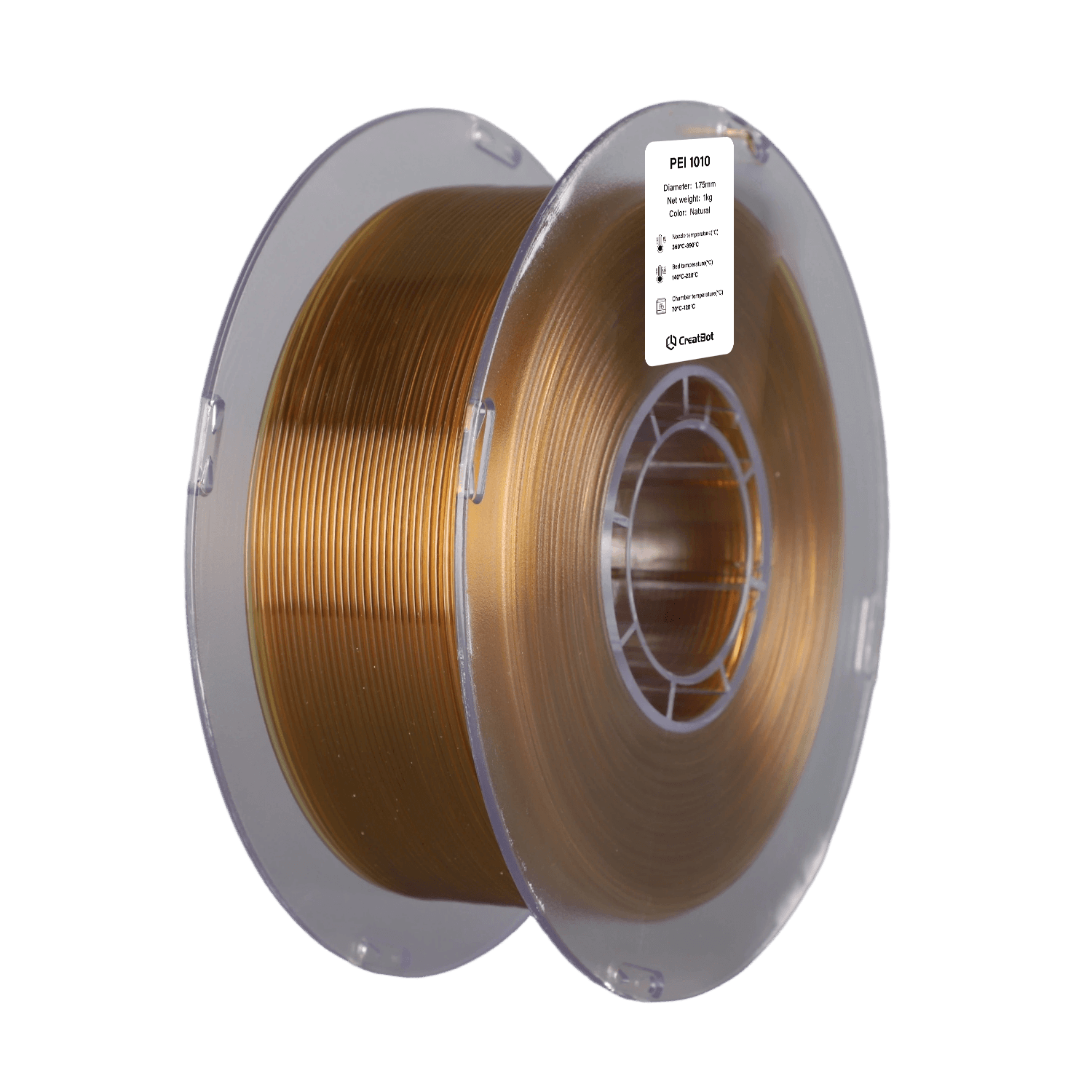
PEI 1010

Vehicle Manufacturing

Tooling & Fixture

Prototyping

Machinery
PEI 1010 3D Printing Filament Features



CreatBot PEI 1010 Print Preview
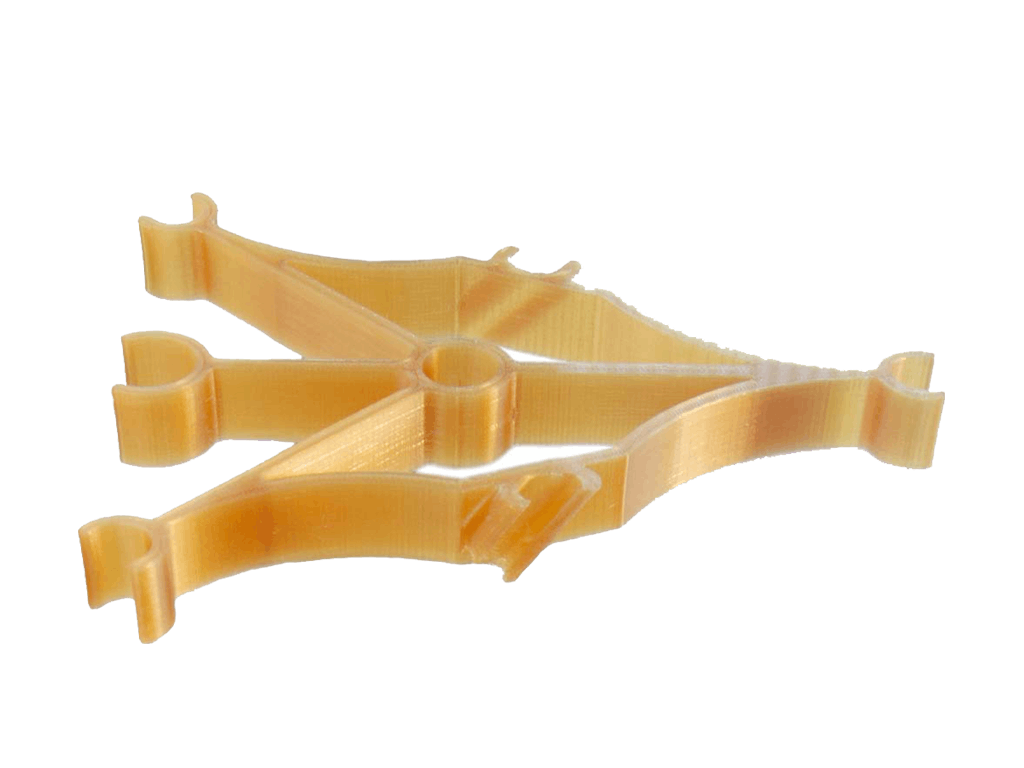
Advantages of Printing with CreatBot Filament
Premium Raw Material Quality
Selected international brand PEI resin, ensuring material performance from the source. Every batch undergoes strict performance testing before leaving the factory.
Factory Calibrated, Ready to Print
Filament formula, melt flow, and wire diameter tolerance (±0.03mm) are calibrated for all CreatBot models, with built-in exclusive parameters in slicing software.
Ultra-High Heat & Flame Resistance
PEI 1010 offers extremely high heat deflection temperature, inherent flame retardancy, and excellent mechanical strength for high-temperature electrical insulation and medical devices.
Technical Data Sheet
| Pre-printing Drying Conditions | |
|---|---|
| Drying Temperature and Time | 100-120℃,6-8 H |
| Print Parameters | |
|---|---|
| Nozzle Temperature | 360-390℃ |
| Nozzle Diameter | 0.4 / 0.6 / 0.8 / 1.0 mm |
| Print Bed Surface Treatment | 3D Printing Spray / PVP Glue Stick / Specialized Adhesive |
| Print Bed Temperature | 150-240℃ |
| Chamber Temperature | 90-220℃ |
| Cooling Fan | OFF |
| Print Speed | 30-60 mm/s |
| Physical Properties | Test Method | Data |
|---|---|---|
| Density | ISO1183 | 1.28g/cm³ |
| Saturated Water Absorption Rate | 25℃,55%RH | / |
| Melt Flow Rate | 340℃,2.16 kg | 36g/10min |
| Melting Temperature | DSC,10℃/min | 320℃ |
| Vicat Softening Temperature | ISO 306,GB/T 1633 | 210℃ |
| Heat Deflection Temperature | ISO 75,0.45MPa | 208℃ |
| Mechanical Properties | Test Method | Data |
|---|---|---|
| Tensile Strength XY | ISO 527, GB/T 1040 | 89 MPa |
| Tensile Strength Z | ISO 527, GB/T 1040 | / |
| Young's Modulus XY | ISO 527, GB/T 1040 | 4800 MPa |
| Young's Modulus Z | ISO 527, GB/T 1040 | / |
| Elongation at Break XY | ISO 527, GB/T 1040 | 5.3% |
| Elongation at Break Z | ISO 527, GB/T 1040 | / |
| Flexural Strength XY | ISO 178, GB/T 9341 | 165 MPa |
| Flexural Strength Z | ISO 178, GB/T 9341 | / |
| Flexural Modulus XY | ISO 178, GB/T 9341 | 4000 MPa |
| Flexural Modulus Z | ISO 178, GB/T 9341 | / |
| Impact Strength XY | ISO 179, GB/T 1043 | 40 kJ/m² |
| Impact Strength Z | ISO 179, GB/T 1043 | / |
PEI 1010 Filament FAQ
PEI 1010 material printing requires high temperatures and specialized equipment. Recommended nozzle temperature 360-390°C, print bed temperature 150-240°C, chamber temperature 90-220°C. Drying at 100-120°C for 6-8 hours in a forced-air drying oven is required before printing. Cooling fan should be OFF.
PEI 1010 has higher mechanical properties: tensile strength 89 MPa (PEEK 75 MPa), Young's modulus 4800 MPa (PEEK 4400 MPa), flexural strength 165 MPa (PEEK 100 MPa). Meanwhile, PEI 1010 has lower printing temperature (360-390°C vs 400-450°C), making it easier to print.
PEI 1010 material has strong hygroscopicity. Moisture will vaporize during high-temperature printing, causing bubbles inside the print and silver streaks on the surface, seriously affecting mechanical properties and appearance quality.
PEI 1010 is widely used in multiple high-end fields. Typical applications include: ① Aerospace - engine peripheral parts, structural brackets, heat shields; ② Medical devices - artificial bones, surgical instruments, implants; ③ Automotive manufacturing - engine parts, bearings, seals; ④ Electronics - chip carriers, connectors with excellent electrical insulation; ⑤ Precision machinery - high-rigidity structural parts.
PEI 1010 material has strong hygroscopicity, and proper storage is crucial for ensuring print quality. Storage methods: ① Unopened filament should be stored in a cool, dry place (temperature 15-25°C, humidity <30%); ② Opened filament is recommended to be stored in a sealed bag with desiccant; ③ If not used for more than 24 hours, remove the filament from the printer and store it sealed.
First layer adhesion is key to successful PEI 1010 printing. Recommended measures: ① Heat print bed to 150-240°C; ② Use 3D printing spray, PVP glue stick, or specialized adhesive; ③ Reduce first layer print speed to 15-20mm/s; ④ Set first layer line width to 120-150% of nozzle diameter; ⑤ Use brim with 8-12mm width.
More Materials
Contact Us


Message
Application Fields
Quick Links
