
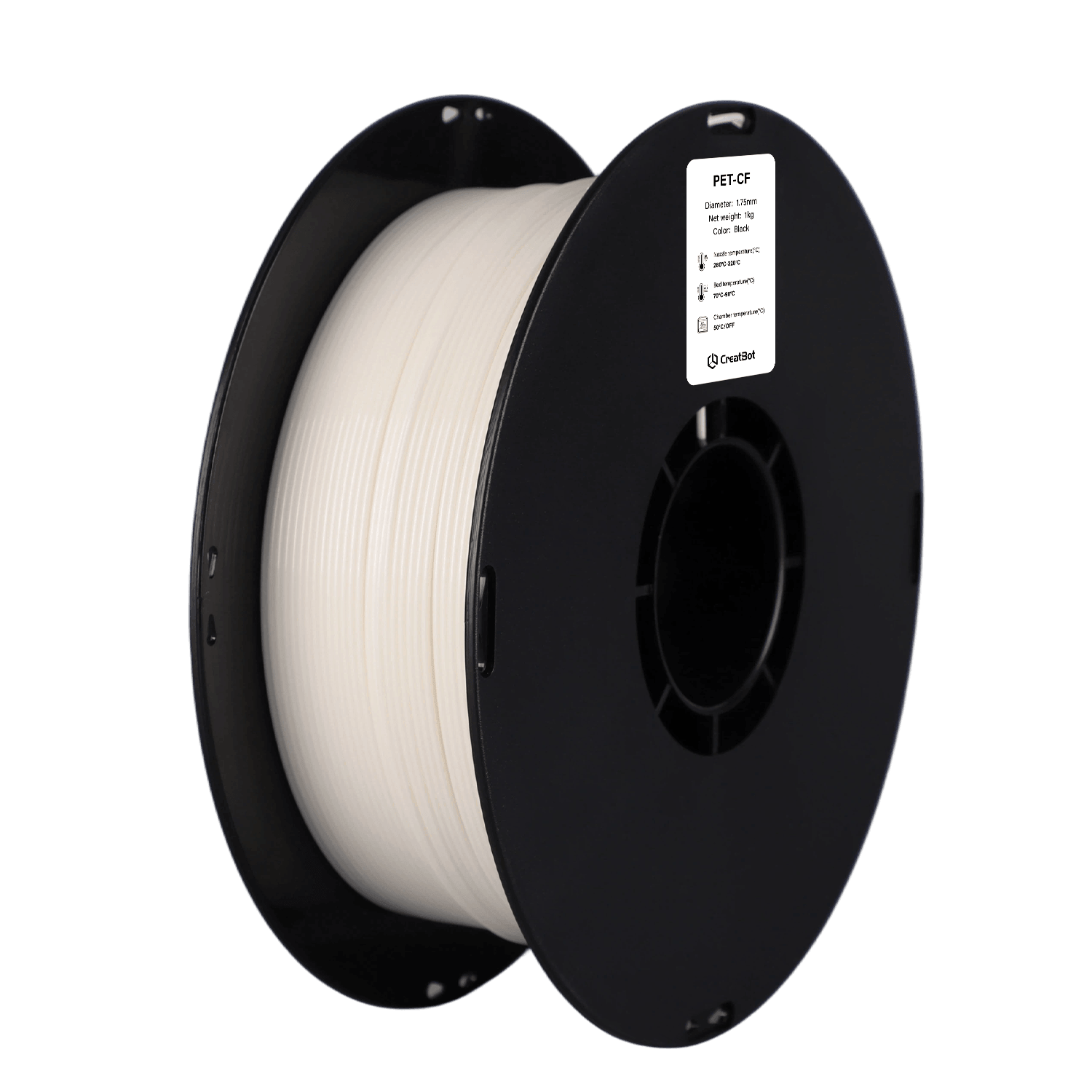
PETG-ESD

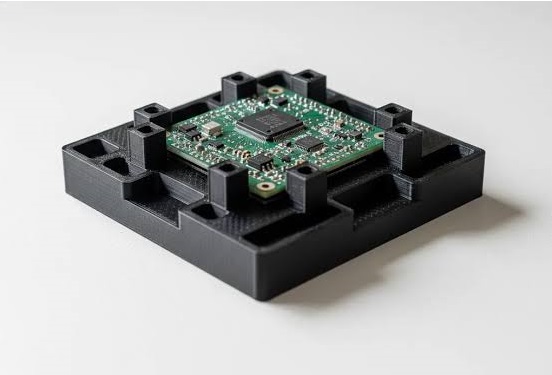
Electronic Components

Antistatic Tooling

SMT Fixtures

Semiconductor Equipment
PETG-ESD 3D Printing Filament Features


CreatBot PETG-ESD Print Preview
Advantages of Printing with CreatBot Filament
Premium Raw Material Quality
Selected high-quality PETG resin and conductive fillers, with conductive particles uniformly dispersed in the matrix to ensure batch-to-batch consistency of static dissipative performance. Every batch undergoes full inspection of tensile strength and diameter tolerance before shipping, ensuring stable and reliable performance.
Factory Calibrated, Plug and Print
Filament formulation, melt flow and diameter tolerance (±0.03mm) are calibrated for the full CreatBot machine range, with exclusive parameters built into the slicing software. No repeated tuning required - unpack and print, even beginners can achieve stable print quality.
Static Dissipative, Component Protection
Stable static dissipative performance ensures static charges generated during friction, contact and separation quickly dissipate, suitable for precision applications sensitive to static electricity such as electronic component trays and antistatic tooling.
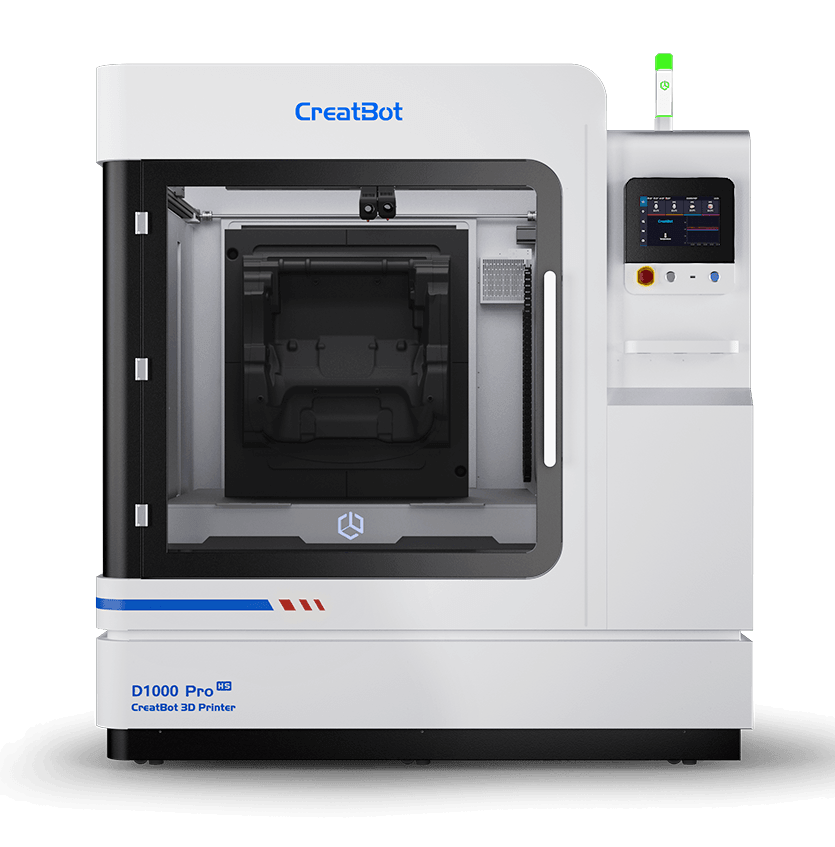
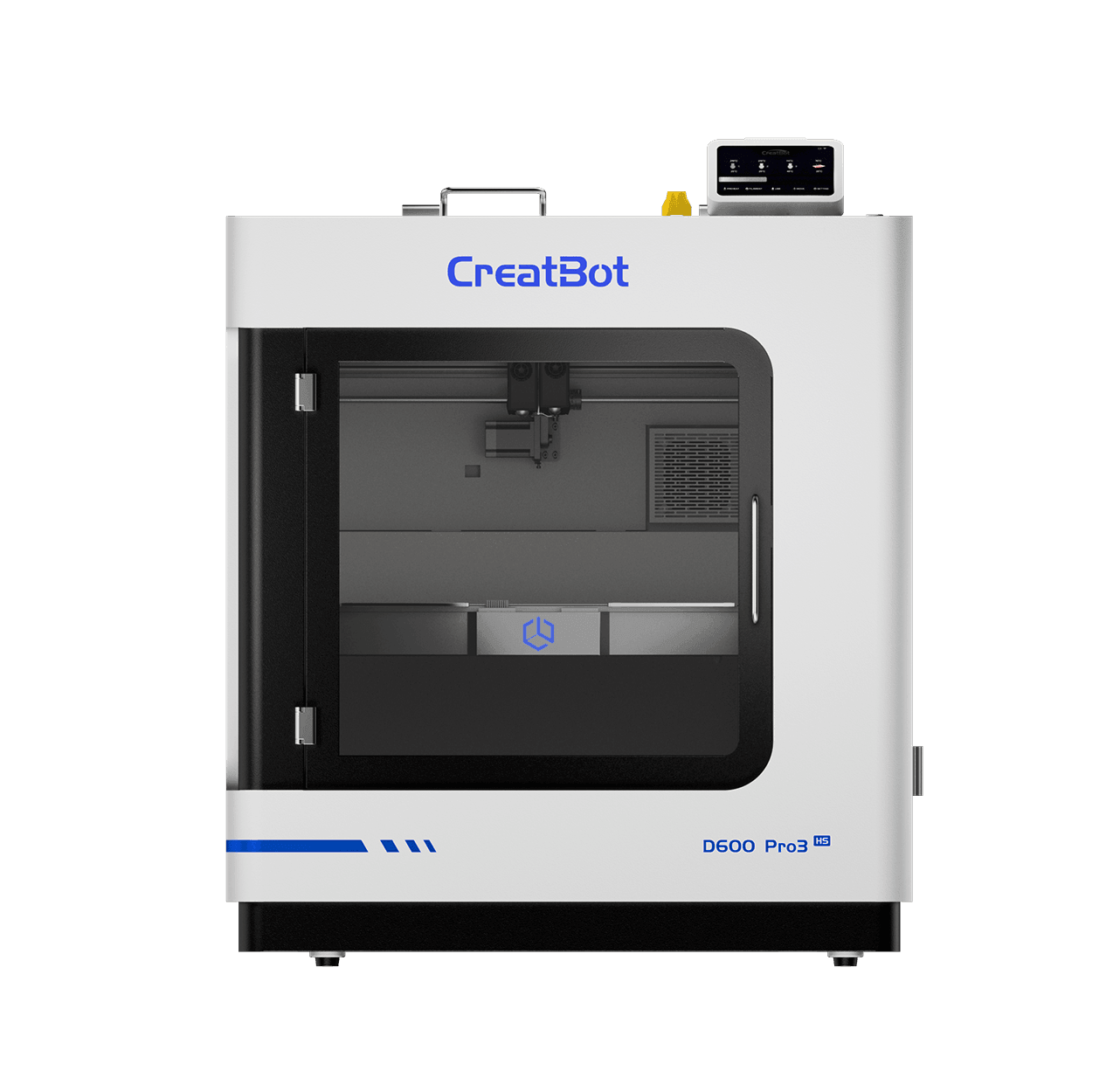
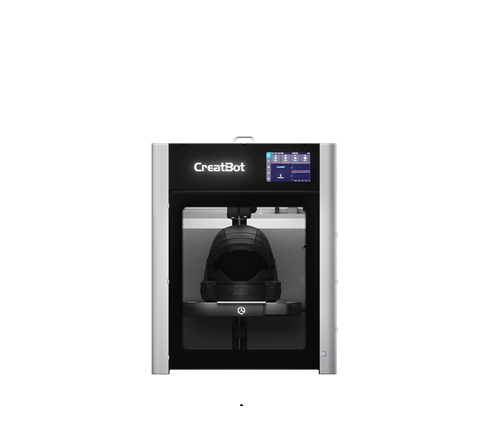
Supported 3D Printers
CreatBot industrial 3D printers are designed for high-performance materials. The following models feature heated chambers and high-temperature nozzles for professional-grade results.
Technical Datasheet
| Item | Value |
|---|---|
| Pre-Printing Drying Conditions | 50-60°C, 6-8 H (Forced-air drying oven) |
| Nozzle Temperature | 240-260°C |
| Nozzle Diameter | 0.4 / 0.6 / 0.8 / 1.0 mm |
| Bed Surface Treatment | 3D printing spray / PVP glue stick / special adhesive |
| Bed Temperature | 70-90°C |
| Chamber Temperature | / |
| Cooling Fan | 40-90% |
| Print Speed | < 300 mm/s |
| Physical Properties | Test Method | Value |
|---|---|---|
| Density | ISO1183 | 1.22g/cm³ |
| Saturated Water Absorption | 25°C, 55%RH | / |
| Melt Index | 230°C, 5 kg | 18.1g/10 min |
| Melting Temperature | DSC,10°C/min | / |
| Vicat Softening Temperature | ISO 306, GB/T 1633 | / |
| Heat Deflection Temperature | ISO 75, 0.45MPa | 68°C |
| Mechanical Properties | Test Method | Value |
|---|---|---|
| Tensile Strength XY | ISO 527, GB/T 1040 | 48 MPa |
| Tensile Strength Z | ISO 527, GB/T 1040 | 19 MPa |
| Young's Modulus XY | ISO 527, GB/T 1040 | / |
| Young's Modulus Z | ISO 527, GB/T 1040 | / |
| Elongation at Break XY | ISO 527, GB/T 1040 | 8.6% |
| Elongation at Break Z | ISO 527, GB/T 1040 | 2.4% |
| Flexural Strength XY | ISO 178, GB/T 9341 | 76 MPa |
| Flexural Strength Z | ISO 178, GB/T 9341 | 41 MPa |
| Flexural Modulus XY | ISO 178, GB/T 9341 | 2150 MPa |
| Flexural Modulus Z | ISO 178, GB/T 9341 | 1450 MPa |
| Notched Impact Strength XY | ISO 179, GB/T 1043 | 4.95 kJ/m² |
| Notched Impact Strength Z | ISO 179, GB/T 1043 | 1.93 kJ/m² |
PETG-ESD Filament FAQ
ESD stands for Electrostatic Discharge. ESD filament refers to materials with static dissipative properties, whose surface resistance lies between insulators and conductors, slowly releasing accumulated static charges to ground and preventing instantaneous discharge from damaging sensitive electronic components. Differences between PETG-ESD and regular PETG: ① Conductivity - PETG-ESD adds conductive fillers to the PETG matrix, making it a static dissipative material, while regular PETG is an insulator; ② Color - ESD materials are usually black; ③ Applications - PETG-ESD is designed for the electronics industry, suitable for electronic component trays, antistatic tooling, SMT fixtures and more; ④ Mechanical properties - both are basically the same, PETG-ESD fully retains PETG's toughness and strength.
Evaluating the static dissipative performance of PETG-ESD: according to IEC 61340-5-1 or ASTM D257 standards, use a surface resistance meter - at 23±2°C, 50±5%RH, place a 5 lb (about 2.27 kg) electrode on the printed part surface and read the resistance value. Measurement results are affected by ambient humidity, surface cleanliness and wall thickness, so evaluation in a constant temperature and humidity environment is recommended. For specific resistivity data, please contact CreatBot for the latest technical documentation.
PETG-ESD is widely used in static-sensitive electronics manufacturing fields. Typical applications include: ① Electronic component trays - turnover and storage trays for ICs, connectors and PCBs to prevent static damage; ② Antistatic tooling and fixtures - positioning jigs, inspection fixtures and placement carriers on SMT production lines; ③ Semiconductor equipment parts - wafer box accessories, equipment guards, vacuum chuck accessories, etc.; ④ Automated production lines - robot grippers, conveyor guides, sensor brackets, etc.; ⑤ Cleanroom supplies - antistatic cart components, rack dividers, etc. PETG-ESD is an ideal choice wherever sensitive electronic components need to be contacted or approached with certain strength and toughness.
PETG-ESD printing parameters are basically the same as regular PETG. Key parameters: ① Drying - dry at 50-60°C for 6-8 hours before printing to avoid bubbles, stringing and rough surfaces from moisture; ② Nozzle temperature - 240-260°C, too low reduces interlayer adhesion, too high causes degradation; ③ Bed temperature - 70-90°C, use 3D printing spray, PVP glue stick or special adhesive to enhance first-layer adhesion; ④ Print speed - recommended below 300mm/s, excessive speed causes stringing; ⑤ Cooling fan - 40-90% cooling to improve overhangs and surface quality; ⑥ Retraction - distance 2-5mm, speed 25-45mm/s to reduce stringing. In addition, a hardened steel nozzle is recommended since the material contains conductive fillers.
CreatBot PETG-ESD achieves static dissipative performance by uniformly dispersing conductive fillers in the PETG matrix. This is a volume conductivity mechanism, and the performance is stable, not subject to the peeling or failure from friction and cleaning that surface-coated antistatic materials suffer. However, note: ① Surface contamination - oil, dust and mold release residue can form an insulating layer affecting surface resistivity measurements; clean the surface with isopropyl alcohol (IPA) and re-measure; ② Mechanical wear - deep scratches and wear may locally affect the conductive network but not overall dissipative performance; ③ Long-term use - under normal use conditions, static dissipative performance remains stable throughout the service life. It is recommended to perform surface resistivity spot checks every six months or per internal standards.
PETG-ESD has essentially equivalent mechanical properties to regular PETG. The addition of conductive fillers has little effect on toughness and strength: tensile strength about 48 MPa (XY direction), flexural strength 76 MPa, flexural modulus 2150 MPa, elongation at break about 8.6%, at the same level as regular PETG. Compared with regular PETG, the differences of PETG-ESD are mainly: ① Electrical performance - static dissipative function; ② Color - usually black, cannot achieve transparency; ③ Surface texture - conductive fillers give the surface a matte finish. Therefore, choose regular PETG for transparency requirements, and PETG-ESD for antistatic requirements.
PETG-ESD has some hygroscopicity like regular PETG. Moisture absorption can cause bubbles, stringing and surface roughness during printing, and may also affect the stability of surface resistivity measurements. Storage advice: ① Unopened filament should be stored in a cool, dry place (temperature 15-25°C, humidity < 30%), protected from direct sunlight; ② Opened filament should be sealed in bags with desiccant (silica gel desiccant, recommended 5-10g per spool) or stored in a filament dryer at 10-20% relative humidity; ③ If not used for a short period (more than 3 days), remove the filament from the printer and seal it. If moisture is detected, dry in a forced-air oven at 50-60°C for 6-8 hours, then cool to room temperature before use.
More Materials
Contact Us


3D Printers
Message
Application Fields
Quick Links
