
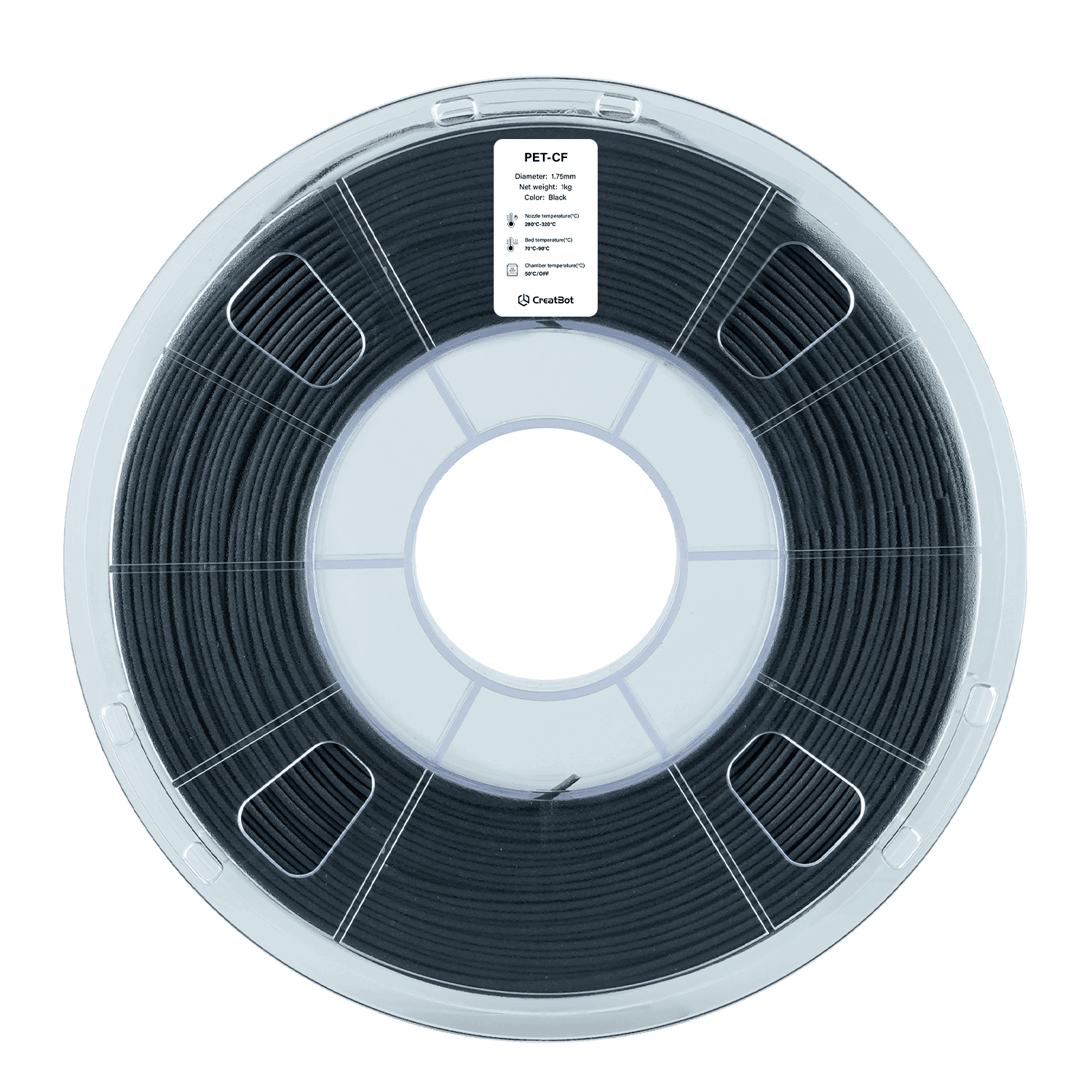
PET-CF

Pièces structurelles

Composants automobiles

Équipements industriels

Dispositifs d'outillage
Caractéristiques du filament



Aperçu de l'impression

Avantages d'impression
Haute résistance et rigidité
L'ajout de fibres de carbone améliore considérablement les propriétés mécaniques, avec un module de traction atteignant 5730 MPa et un module de flexion de 5345 MPa, soit une rigidité supérieure de plus de 60 % aux matériaux PETG standard, capable de remplacer les pièces métalliques dans les applications à forte charge tout en conservant les avantages de légèreté.
Stabilité dimensionnelle exceptionnelle
Les fibres de carbone inhibent efficacement le retrait et le gauchissement pendant l'impression, maintenant une haute précision même pour les grandes pièces avec un écart dimensionnel inférieur à 0,3 %, obtenant des pièces d'ajustement de précision sans post-traitement complexe, particulièrement adaptées aux applications industrielles.
Excellente tenue thermique
Température de fléchissement sous charge de 120 ℃, capable de fonctionner de manière stable à long terme dans des environnements à haute température, adapté aux applications automobiles sous capot et aux équipements industriels, avec une résistance thermique environ 40 ℃ supérieure aux matériaux PETG standard tout en maintenant de bonnes propriétés mécaniques.
Imprimantes 3D Compatibles
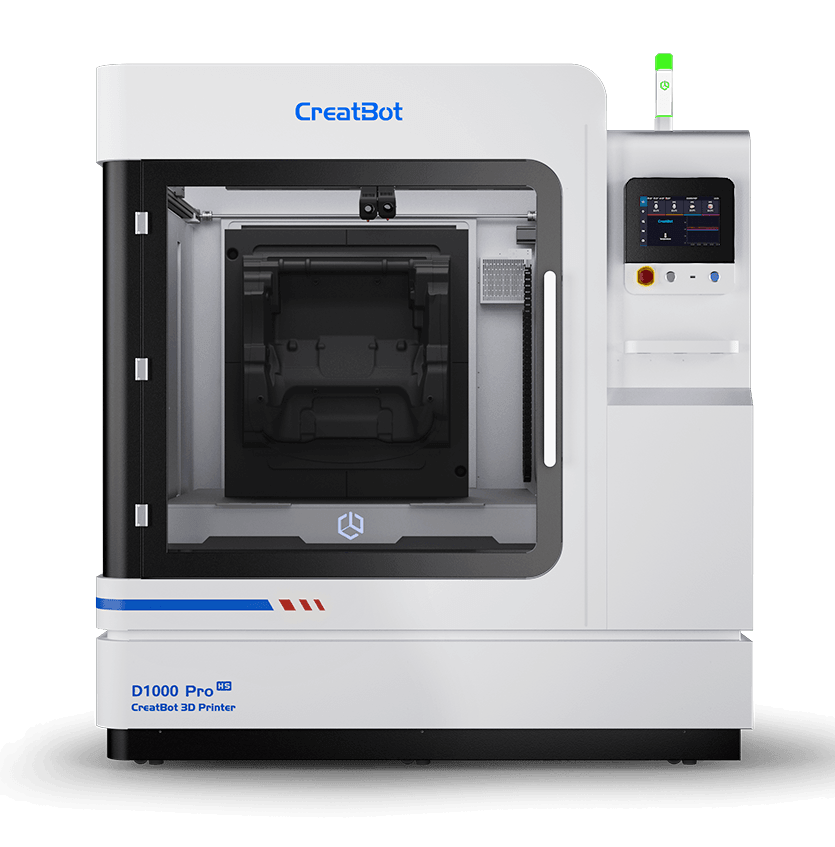
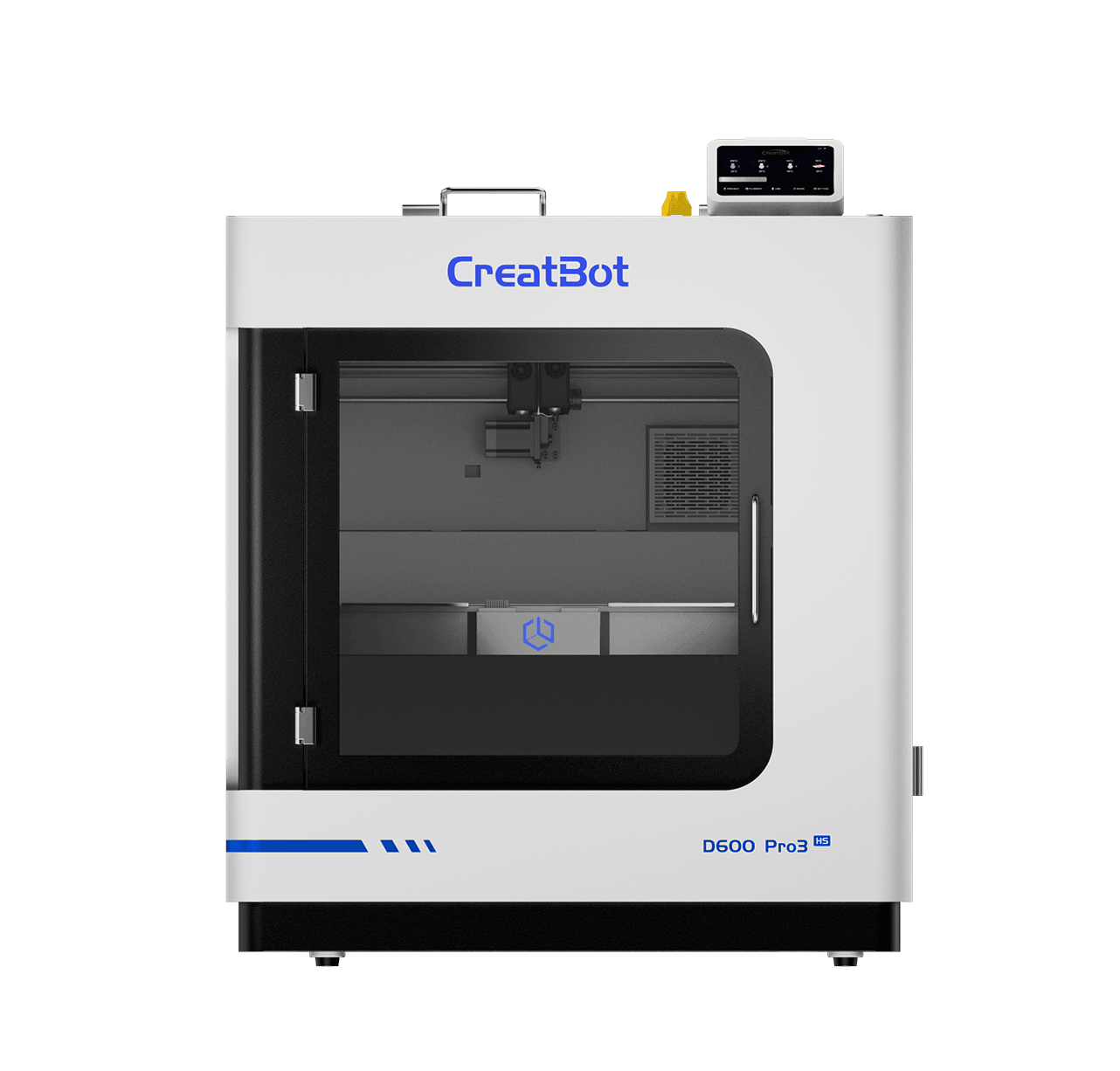
Les imprimantes 3D industrielles CreatBot sont conçues pour les matériaux haute performance. Les modèles suivants disposent d'une chambre chauffée et de buses haute température pour des résultats professionnels.
Fiche technique
| Propriétés physiques | Méthode d'essai | Valeur typique |
|---|---|---|
| Densité | ISO1183 | 1.30g/cm³ |
| Absorption d'eau | 25℃,55%RH | 0.5% |
| Indice de fluidité | 270℃,2.16kg | 6.8g/10min |
| Température de fusion | IOS11357 | 251℃ |
| Température de ramollissement Vicat | ISO 306, GB/T 1633 | / |
| Température de fléchissement sous charge (à 0,45 MPa) | ISO 75, 0.45MPa | 120℃ |
| Propriétés mécaniques | Méthode d'essai | Valeur typique |
|---|---|---|
| Résistance à la traction XY | ISO527 | 72MPa |
| Résistance à la traction Z | ISO527 | 34MPa |
| Module de traction XY | ISO527 | 5730MPa |
| Module de traction Z | ISO527 | 3270MPa |
| Allongement à la rupture XY | ISO527 | 2.49% |
| Allongement à la rupture Z | ISO527 | 1.20% |
| Résistance à la flexion XY | ISO178 | 114MPa |
| Résistance à la flexion Z | ISO178 | / |
| Module de flexion XY | ISO178 | 5345MPa |
| Module de flexion Z | ISO178 | / |
| Résistance au choc XY | ISO179 | 7.75kJ/m² |
| Résistance au choc Z | ISO179 | / |
| Paramètres d'impression | |
|---|---|
| Conditions de séchage | 80-100℃,6-8H |
| Température de la buse | 280-320℃ |
| Diamètre de la buse | 0.4 / 0.6 / 0.8 / 1.0 mm |
| Traitement de la surface du plateau | Spray d'impression 3D/ Colle en bâton PVP/ Adhésif spécialisé |
| Température du plateau | 60-80℃ |
| Température de la chambre | / |
| Ventilateur de refroidissement | OFF |
| Vitesse d'impression | 30-120 mm/s |
FAQ
Le PET-CF est un matériau d'ingénierie haute performance renforcé de fibres de carbone dans une base PET, offrant des avantages significatifs par rapport au PETG standard : 1) Propriétés mécaniques : résistance à la traction de 72 MPa (PETG ~50 MPa), module de traction de 5730 MPa (PETG ~2100 MPa), rigidité supérieure de plus de 60 % ; 2) Tenue thermique : HDT de 120 ℃ (PETG ~70 ℃), résistance thermique environ 40 ℃ supérieure ; 3) Stabilité dimensionnelle : les fibres de carbone inhibent efficacement le retrait et le gauchissement, maintenant une haute précision même pour les grandes pièces ; 4) Absorption d'eau : absorption d'eau saturée de seulement 0,5 %, meilleure que le PETG. Conseil de choix : choisissez le PET-CF pour les pièces industrielles nécessitant une haute résistance, rigidité et tenue thermique ; choisissez le PETG pour les usages généraux et le prototypage afin de réduire les coûts et la difficulté d'impression.
L'impression du PET-CF nécessite un contrôle strict des paramètres suivants pour des résultats optimaux : 1) Séchage : séchage approfondi avant impression, 80-100 ℃ pendant 6 à 8 heures, pour éliminer l'humidité et éviter les bulles et la perte de résistance ; 2) Température de la buse : 280-320 ℃, recommandé autour de 300 ℃, trop basse provoque une mauvaise adhérence intercouches, trop haute provoque une carbonisation ; 3) Température du plateau : 60-80 ℃, assure l'adhérence de la première couche et réduit le gauchissement ; 4) Choix de la buse : utiliser impérativement une buse en acier trempé, rubis ou carbure de tungstène, les buses en laiton standard s'usant rapidement sous l'action des fibres de carbone ; 5) Vitesse d'impression : 30-120 mm/s, recommandé en dessous de 60 mm/s pour assurer la liaison intercouches ; 6) Ventilateur de refroidissement : ARRÊTÉ, éviter le refroidissement rapide provoquant la séparation intercouches ; 7) Plateau d'impression : utiliser une colle spécialisée ou une feuille PEI pour améliorer l'adhérence.
Le PET-CF est compatible avec toutes les imprimantes 3D industrielles haute température CreatBot, les modèles recommandés incluent : 1) D400 HS : chambre à température constante complète, buse jusqu'à 320 ℃, idéale pour imprimer de grandes pièces à haute résistance comme le PET-CF ; 2) : buse jusqu'à 300 ℃, chambre à température constante, adapté aux pièces de taille moyenne ; 3) D600 Pro3 HS : impression grand format, chambre à température constante, adapté aux grandes pièces industrielles. Prérequis pour utiliser le PET-CF : la température de la buse doit atteindre au-dessus de 280 ℃, disposer d'une chambre à température constante (pour réduire le gauchissement), fonction de plateau haute température. L'utilisation d'imprimantes de bureau pour le PET-CF n'est pas recommandée, une température et un contrôle de chambre insuffisants provoqueront des échecs d'impression.
Le PET-CF a une absorption d'eau saturée de seulement 0,5 %, bien inférieure au PETG standard (~0,8 %) et au PA (~3-8 %), ce qui est l'un des avantages apportés par le renfort de fibres de carbone. Méthodes de stockage appropriées : 1) Matériau non ouvert : stocker directement dans un endroit sec et frais, éviter la lumière directe du soleil ; 2) Matériau ouvert : utiliser des sacs hermétiques ou des boîtes sèches pour le stockage, déshydratant recommandé ; 3) Traitement avant impression : même si le matériau semble sec, un séchage à 80-100 ℃ pendant 6 à 8 heures avant impression est toujours recommandé pour garantir pleinement la meilleure qualité d'impression ; 4) Pièces imprimées : un stockage hermétique ou une utilisation dans des environnements secs est recommandé, bien que le PET-CF ait une faible absorption d'eau, une exposition à long terme dans des environnements très humides affectera tout de même ses propriétés mécaniques.
Le PET-CF convient à l'impression de diverses pièces de qualité industrielle, les applications typiques incluent : 1) Pièces structurelles : supports mécaniques, composants de robots, châssis de drones et autres pièces nécessitant une haute résistance et rigidité ; 2) Pièces automobiles : composants sous capot, supports de capteurs, boîtiers électriques et autres pièces résistantes à la chaleur ; 3) Équipements industriels : boîtiers d'équipement, couvercles de protection, panneaux d'outils, etc. ; 4) Dispositifs d'outillage : gabarits de ligne de production, jauges de contrôle, gabarits de positionnement, etc. ; 5) Isolation électrique : boîtes de jonction électriques, supports d'isolation, etc. (le PET-CF possède certaines propriétés d'isolation) ; 6) Remplacement métallique : dans les scénarios où les exigences de rigidité ne sont pas extrêmement élevées, peut remplacer des pièces métalliques comme les alliages d'aluminium pour alléger le poids. Particulièrement adapté aux applications nécessitant une haute résistance, une tenue thermique, une stabilité dimensionnelle et une légèreté.
Le PET-CF possède une excellente tenue thermique : 1) Température de fléchissement sous charge (HDT) : 120 ℃ (testée à 0,45 MPa), peut fonctionner de manière stable en dessous de 100 ℃ pendant de longues périodes ; 2) Résistance thermique à court terme : peut supporter des températures élevées à court terme supérieures à 150 ℃ sans déformation significative ; 3) Par rapport au PETG : résistance thermique environ 40 ℃ supérieure (PETG ~70 ℃) ; 4) Par rapport à l'ABS : résistance thermique environ 50 ℃ supérieure (ABS ~78 ℃) ; 5) Applications : adapté aux environnements à haute température tels que les applications automobiles sous capot, les équipements industriels et les composants électriques. Remarque : bien que le PET-CF ait une excellente tenue thermique, dans des environnements à haute température soutenue (>100 ℃) sur le long terme, un traitement de recuit est recommandé pour éliminer les contraintes internes et assurer la stabilité dimensionnelle.
Plus de Matériaux
Contactez-nous


Message
Domaines d'Application
Liens rapides
