


After months of double-blind testing and rigorous application assessments against several top-tier European and American 3D printing platforms, three core departments at BMW Germany Headquarters—R&D HQ, Exterior Design, and Prototyping Workshop—reached a strategic consensus: to purchase 10 CreatBot D1000 Pro HS large-format industrial 3D printers across borders and fully deploy them in the next-generation automotive design and R&D process.
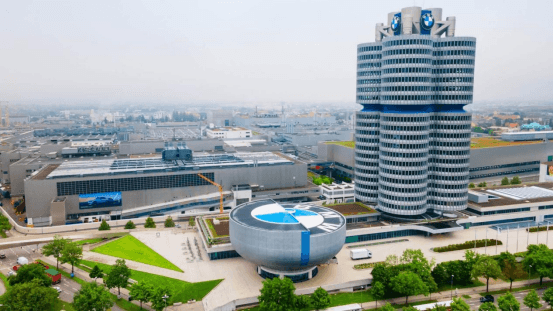
BMW: Defining the Future of Automotive Design and Engineering Standards
As a world-renowned luxury automobile manufacturer, the German BMW Group has represented the highest standards of automotive engineering, exceptional design, and driving innovation for over a century. At BMW, the development of every new model is a continuous transcendence of the boundaries of visual aesthetics, extreme performance, and advanced manufacturing processes. From the brand's iconic "kidney grille" design to the highly challenging aerodynamic body structures, every exterior component perfectly blends emotional styling with rigorous engineering precision. At BMW's German headquarters and global R&D facilities, innovation is reflected not only in the definition of next-generation vehicles but also in the continuous optimization of the process that "turns creativity into reality." To support this vision, BMW has officially integrated the CreatBot D1000 Pro HS large-format 3D printing technology into the R&D prototyping process of its mainstream models.
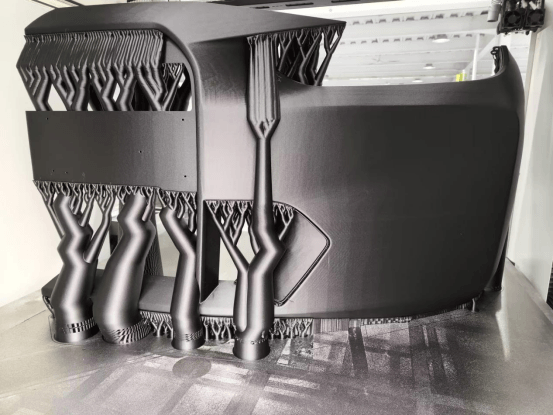
Challenge: Breaking Through the Design Verification Bottleneck in Automotive R&D
In the development process of next-generation vehicles, the rapid prototyping and design verification of the front face assembly (grille and front bumper mask) has always been a time-consuming and labor-intensive critical bottleneck. As the "visual face" of the entire vehicle and a core component for aerodynamic wind tunnel testing, traditionally producing 1:1 full-size front face prototypes required reliance on extremely complex CNC clay milling or small-batch temporary mold development (soft tools/simple molds). High costs and long lead times: traditional processes often require weeks of waiting with enormous capital investment. Extremely high design iteration trial-and-error costs: once aerodynamic defects, assembly interferences, or aesthetic proportion deviations are discovered during wind tunnel testing or styling review, the entire physical prototype is directly scrapped and must be reprocessed from scratch, seriously lengthening the vehicle R&D iteration cycle.
Core Needs of the BMW R&D Team
How can the design team break free from high-cost, highly restrictive traditional tooling methods in the early R&D stage, freely iterate on 1:1 scale exterior designs, and significantly shorten the verification cycle? BMW needs an advanced manufacturing solution capable of:
✔ Directly manufacturing complete large-size automotive structural parts;
✔ Supporting rapid overnight-level design iterations;
✔ Eliminating high tooling costs and material waste in traditional model manufacturing;
✔ Providing high-precision physical verification models before design freeze.
Solution: Rapidly Transforming Digital Designs into Real Automotive Components
By introducing the CreatBot D1000 Pro HS, BMW has successfully established a more agile and efficient large-format automotive prototype development closed loop: Digital Design (CAD) → Large-format 3D Printing (CreatBot) → Physical Assembly Verification/Wind Tunnel Testing → Rapid Re-iteration. In extreme dimensional deformation control (warping risk) and high-performance carbon fiber composite continuous stable extrusion tests where many global additive manufacturing giants failed, CreatBot ultimately became the only brand in the world to successfully pass all validations and deliver perfectly. Today, these 10 large-format industrial printers run at full capacity 24/7 at BMW headquarters, winning high praise from BMW's top German engineering team with their zero-failure-rate performance, fully undertaking the rapid prototyping mission for 1:1 full-size front face assemblies and kidney grilles for next-generation models.
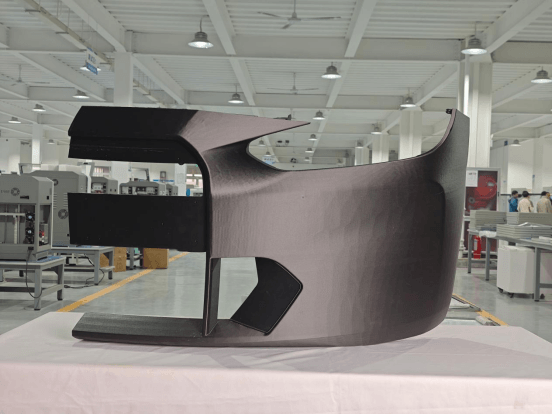
Typical Application Scenarios
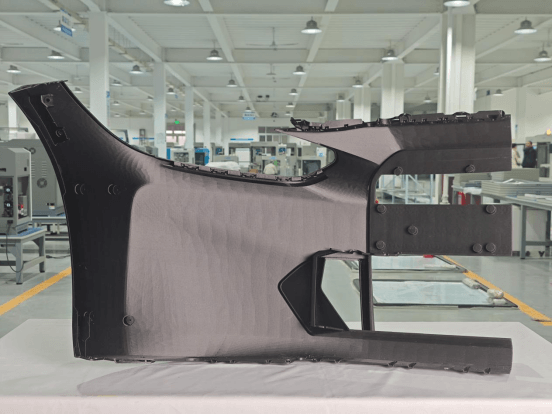
1:1 Full-Size One-Piece Prototype: Directly reads CAD data and one-piece prints complete BMW front face assemblies over 1000mm. No slicing segmentation, no post-processing bonding or assembly, eliminating geometric deformation errors caused by splicing.
Styling and Aesthetic Design Review: Helps design teams physically evaluate grille mesh geometric features, light reflection, and surface transition effects on real vehicle chassis.
Aerodynamic Wind Tunnel Testing: Uses high-strength carbon fiber engineering plastic parts printed by D1000 Pro HS for direct vehicle mounting in high-speed wind tunnel airflow testing and extreme pressure testing of cooling efficiency.
Accelerating R&D-to-Market Cycle for Global Automakers
By integrating industrial large-format FFF 3D printing into the entire vehicle development process, global leading automakers like BMW have unlocked the following significant competitive advantages:
Extreme Iteration Cycle Compression: Seamlessly front-loading 3D printing into early R&D, design concepts can be transformed into physical parts within 24 hours, achieving agile iteration of "modify today, mount tomorrow."
Zero Mold Cost Risk: All design modifications only need to be completed in CAD software and reprinted with one click, without adjusting any hard molds, production fixtures, or tooling, completely eliminating potential scrap and rework losses.
Dramatically Shortened New Vehicle Time-to-Market: Reduces the entire "prototype manufacturing-testing verification-modification republication" cycle from originally several weeks to just a few days, helping automakers seize market opportunities at new model launch windows.
Why Choose CreatBot D1000 Pro HS?
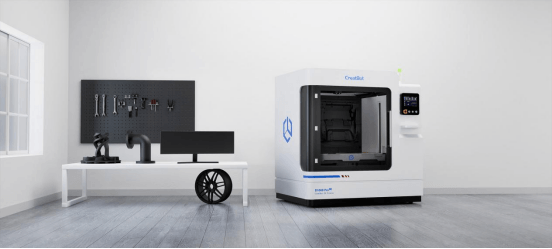
The D1000 Pro HS provides core industrial attributes that meet the extremely tight tolerances and strength requirements of automotive R&D:
Ultra-Large Format One-Piece Printing Capability
With a massive build volume of 1050 x 1050 x 1050 mm, it allows large automotive components (such as front faces, dashboard frames, side skirts) to be directly printed in one piece, eliminating traditional splicing processes and significantly improving sample structural strength.
Industrial-Grade High Reliability
An ultra-rigid all-metal frame combined with a precision transmission system ensures consistent interlayer adhesion and geometric accuracy during hundreds of hours of ultra-long print tasks, adapting to the demanding 24/7 continuous operation standards of automotive factory workshops.
High-Extrusion High-Speed Workflow
Advanced high-temperature extrusion and thermal control technology, while ensuring high surface precision, dramatically reduces print time, helping R&D teams achieve rapid seamless switching between concept validation and extreme physical testing.
Flexible Material Compatibility
Not only supports conventional filaments but also compatible with high-performance industrial materials such as carbon fiber/glass fiber reinforced materials (e.g., PA-CF, PET-CF), meeting diversified prototyping needs from high-precision visual display samples to high-temperature resistant, high-rigidity functional test parts.
Conclusion: Redefining the Future of Automotive Prototype Manufacturing
The deep integration of large-format additive manufacturing technology with the automotive R&D process marks a profound paradigm shift in how modern automobiles are designed, tested, and perfected. By fully introducing full-size 3D printing in the early R&D stage, BMW has not only broken the physical constraints of traditional tooling molds on design but also achieved ultra-high-speed validation from concept to physical part. This is not just the introduction of a high-precision device, but represents the strides of the world's top automakers toward a more agile, digital, and innovation-driven "next-generation digital manufacturing (Industry 4.0)."
With CreatBot D1000 Pro HS, automotive design is moving from digital creativity to the real world at unprecedented speed.
Is your workshop also facing pain points such as long outsourcing cycles for traditional prototypes, high costs for mold development and sampling, and difficulty in one-piece forming of high-strength materials?
Contact a CreatBot technical manager immediately to customize your exclusive industrial additive manufacturing solution and schedule a free professional sample evaluation!


