
Octopus New Energy Achieves Rapid Heat Pump Manufacturing and Mass Production with CreatBot 3D Printing
 Release date:2025-12-22
 Estimated reading 6 minute
CreatBot Empowers Green Energy Innovation
This white paper details how Octopus, a global leading new energy enterprise, revolutionized its heat pump product R&D and production processes by introducing the CreatBot D600Pro2 series industrial large-format 3D printers. Facing growing market demand, Octopus leveraged the D600Pro2 series printers' outstanding advantages in cost control, material diversity, printing strength, and post-processing compatibility to successfully achieve rapid and economical manufacturing of large functional test parts, tooling fixtures, and end-use components, significantly shortening the product time-to-market and providing agile and reliable manufacturing solutions for its large-scale charging station heat pump deployments.
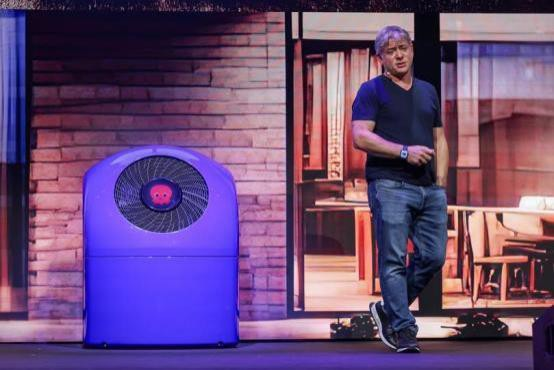
Heat Pump Product Launch OctopusEnergy
R&D Challenges in Industry Transformation
With the explosive growth of the global electric vehicle industry, the charging station network as supporting infrastructure is expanding rapidly. Heat pump systems are key components that maintain the normal operation of internal components of charging stations under extreme temperatures, and their demand has surged accordingly. As an innovator in this field, Octopus New Energy faces the following severe challenges:
- Rapid Iteration Needs: Product designs need continuous optimization to adapt to different environments. Traditional mold manufacturing has long cycles and high costs, which cannot meet the needs of rapid trial and error and iteration.
- Large Component Manufacturing: Heat pump housings and internal large functional parts have large dimensions, and ordinary desktop 3D printers cannot meet the demand for integrated molding.
- Functionality and Durability: Components need to have good mechanical strength, weather resistance, and even heat resistance to cope with harsh outdoor environments.
- Cost Control: On the premise of ensuring quality, there is an urgent need to reduce the cost of prototype production and small-batch trial production to improve the overall project return on investment.
Octopus New Energy's Solution: Introducing CreatBot D600Pro Series Industrial FDM 3D Printers
To break through the above bottlenecks, Octopus New Energy introduced the CreatBot D600Pro series industrial FDM 3D printers in its R&D center, aiming to build independent, rapid, and flexible internal rapid prototyping capabilities.
The core reasons for choosing the D600Pro series printers lie in their excellent performance and wide material compatibility:
- Large Format Build Volume: Meets the needs of large electric vehicle components or batch printing of small components.
- Excellent Printing Stability and Precision: Ensures good assembly and functional test reliability of samples.
- Wide Engineering Material Adaptability: This is the core advantage of its solution. The D600Pro series printers can handle a variety of high-performance engineering plastics to meet the strict requirements of different scenarios.
- Significant Cost Efficiency: Internal printing reduces the unit cost to a fraction of traditional methods, achieving "printing freedom".
- Post-Processing Capabilities: Printed models can achieve surface quality and visual effects close to final products through post-processing techniques such as sanding, painting, electroplating, and VaporSmoothing, meeting the needs of styling reviews.
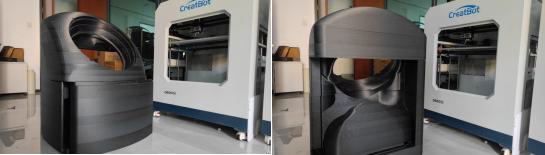
Heat Pump Mold Printing Process
Application Implementation: From Design to Pre-Mass Production
Octopus New Energy deeply integrated the D600Pro2 series printers into the development and manufacturing processes of its heat pump products:
- Rapid Prototyping and Functional Testing: Engineers directly printed internal brackets, air ducts, and other structural components of heat pumps using PC materials, and conducted strict functional and durability tests. Design issues were discovered and modified within days, without waiting weeks for traditional machined parts.
- Customized Tooling and Fixtures: Utilizing the wear resistance of PA materials, specialized assembly fixtures and testing jigs for the production line were printed, which not only shortened the tooling preparation time but also improved production efficiency due to their lightweight and customized advantages.
- End-Use Component Manufacturing and Post-Processing: For small-batch specific models or transitional production, Octopus directly used the D600Pro2 to print heat pump housings and non-core load-bearing structural components. After printing, the components went through post-processing techniques such as sanding, sandblasting, painting/electroplating, and their surface texture and performance could meet final use requirements, achieving a "pre-mass production" application leap.
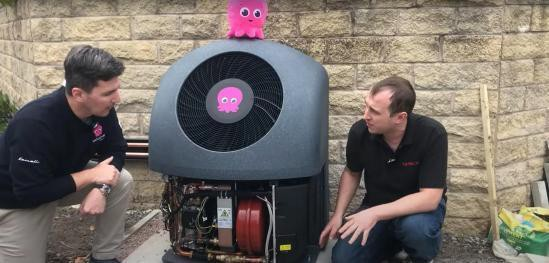
Heat Pump Functional Testing and Internal Structure Display
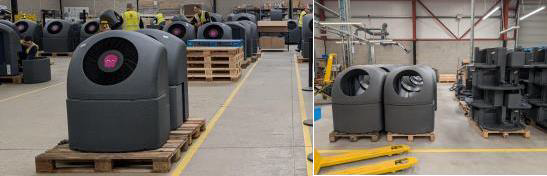
Heat Pump Pre-Mass Production Process
Results Summary: From Cost Center to Innovation Engine
By deploying CreatBot D600Pro2, Octopus New Energy achieved significant commercial and technological returns:
- 70% Reduction in R&D Cycle: The time from design to obtaining testable physical parts was shortened from weeks to days, greatly accelerating the pace of product innovation.
- Significant Reduction in Manufacturing Costs: Compared with traditional mold opening or outsourced CNC processing, the cost of prototype and small-batch manufacturing was reduced by up to 60%, saving a lot of funds in the early stage of the project.
- Leap in Manufacturing Flexibility: Without relying on external supply chains, it can quickly respond to design changes internally and achieve small-batch, customized component production, enhancing market competitiveness.
- Promoting Sustainable Manufacturing: Additive manufacturing produces far less material waste than subtractive manufacturing, which is highly consistent with Octopus's new energy enterprise philosophy.
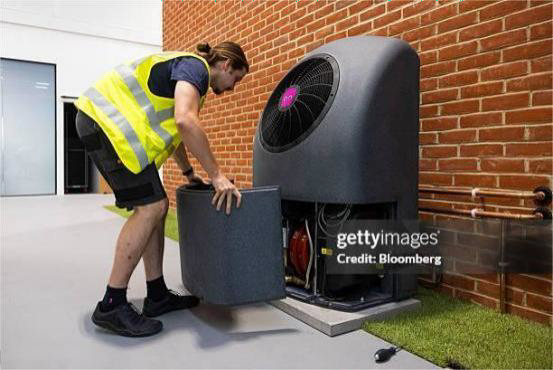
Heat Pump Actual Installation Application Scenario
Conclusion and Outlook
The case of Octopus New Energy eloquently proves that industrial 3D printing technology is no longer a simple prototyping tool, but has become a core production force that runs through the entire process of product development, trial production, and even final component manufacturing. With its powerful hardware performance, wide material ecosystem, and excellent cost performance, the CreatBot D600Pro2 series printers have successfully empowered industry leaders like Octopus, helping them maintain agility and innovation in fierce market competition.
In the future, CreatBot will continue to deepen cooperation with Octopus New Energy, exploring more applications such as carbon fiber reinforced composite materials in higher strength components, and jointly promoting the digital transformation of manufacturing models in the new energy industry.


