


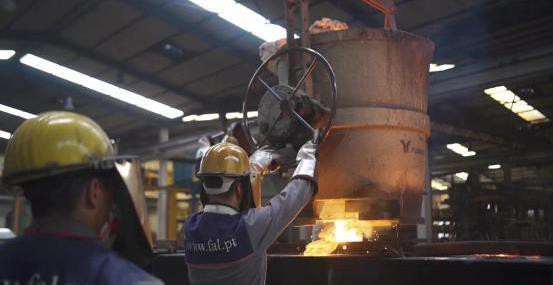
FAL Company Mold Manufacturing Factory
This article details how FAL (Fábrica de Armas de Leiria), a leading Portuguese industrial manufacturer, successfully addressed the three core pain points of traditional mold manufacturing - long lead times, high costs, and limited design freedom - by introducing the CreatBot D1000 HS industrial 3D printer. The case shows that FAL reduced the delivery cycle of complex molds from the traditional 4 weeks to 5 days, cut unit costs by 82%, achieved previously unmanufacturable conformal cooling channels, and ultimately increased injection molding yield to 99%. This research provides a replicable digital upgrade path for the manufacturing industry, especially in the mold and precision casting fields.
FAL Company Mold Manufacturing Factory
The Dilemma of Traditional Mold Manufacturing
Molds are the "efficiency amplifiers" in industrial production, and their efficiency directly determines the development speed, cost, and quality of final products. However, traditional mold processes represented by CNC subtractive manufacturing are increasingly becoming bottlenecks limiting innovation.
As a precision manufacturing enterprise with a long history, FAL's mold department has deeply experienced the following challenges:
Long Delivery Cycles: CNC machining of complex molds takes more than 200 hours, with an overall delivery time of 3-4 weeks, unable to meet the market's demand for rapid response.
High Production Costs: The unit cost of small-batch trial molds exceeds €5,000, with material waste rates as high as 45%, severely compressing project profits.
Technical Ceiling on Design Freedom: Traditional machining methods can hardly manufacture conformal cooling channels that meet the optimal cooling efficiency, leading to prolonged injection cycles, uneven part cooling, and low yield.
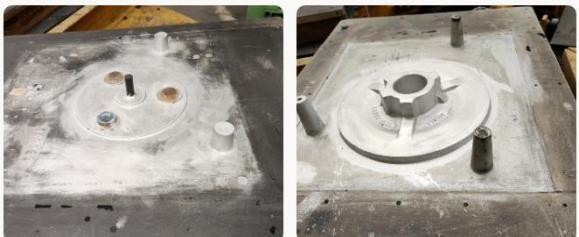
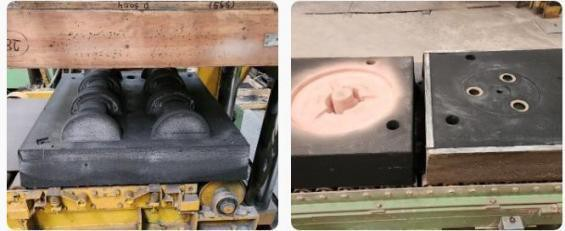
FAL Company's traditional wooden pattern making and furan sand molding process, which is complicated and time-consuming
CreatBot D1000 HS Empowers Rapid Mold Manufacturing
In 2025, FAL decided to embrace Additive Manufacturing (AM) technology by introducing the CreatBot D1000 HS large industrial 3D printer and applying it to rapid mold manufacturing processes.
Digital Model Design: Engineers directly use 3D software for mold design, with the freedom to integrate conformal cooling channels and lightweight topological structures.
Integrated 3D Printing: Using D1000 HS and its high-temperature materials (such as HTPA-CF) to directly print high-precision, heat-resistant mold models.
Rapid Casting: Based on 3D-printed models, sand mold or investment casting is performed, and finally molten steel is poured to obtain the final metal mold.
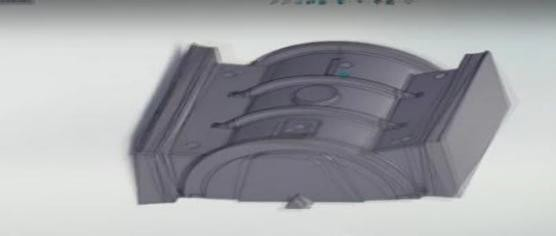
Digital Model Design
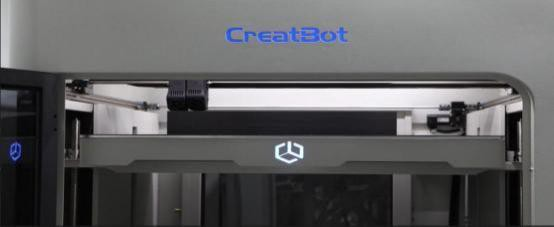
CreatBot D1000 HS Printing Large Mold Process
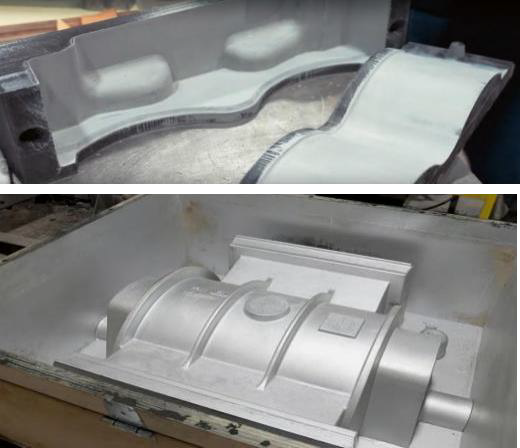
Mold Making Process Based on 3D-Printed Model
Why Choose CreatBot D1000 HS?
Large Build Volume (1000×1000×1000mm³): Can integrally print medium-sized injection molds, avoiding segmented splicing and ensuring structural strength and precision.
High-Performance Material Compatibility: Supports high-temperature engineering materials such as HTPA-CF, and printed molds can be directly used in injection molding environments below 200°C, meeting the trial production and production needs of most plastics.
Industrial-Grade Precision (±0.2mm): High surface quality of printed parts greatly reduces the need for subsequent machining, truly achieving "near-net shaping."
Effect Analysis: Quantitative Revolutionary Improvement
FAL's practical data fully demonstrates the advantages of the additive manufacturing solution.
1. Efficiency Improvement: Time is Competitiveness
Mold delivery time has been drastically reduced from 4 weeks to 5 days. The continuous printing capability and large-format build capacity of D1000 HS enable even the most complex molds to be prototyped in a short time, achieving a "speed revolution."
2. Cost Control: Significant Profit Margin Improvement
The table below clearly compares the direct costs of the two solutions:
| Item | Traditional Steel Mold | D1000 HS 3D-Printed Mold | Saving Effect |
|---|---|---|---|
Unit Cost | €5,200 | €950 | 82%↓ |
Trial Mold Times | 3-5 times | 1-2 times | 60%↓ |
Material Waste | 45% | <5% | 90%↓ |
3. Performance Breakthrough: Design Leads Manufacturing
Conformal Cooling Channels: 3D printing achieves internal flow channels of any complex shape, maximizing mold cooling efficiency, shortening injection cycles by 30%, and increasing product yield to 99%.
Lightweight Structure: Through topology optimization, the weight of the mold itself is reduced by 50%, not only saving materials but also improving loading and unloading efficiency and reducing the labor intensity of operators.
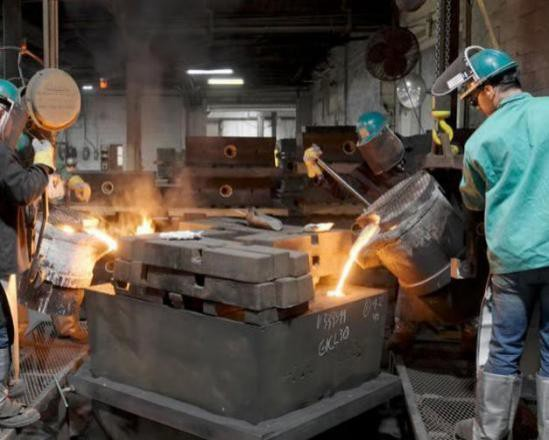
Injection mold printed by D1000 HS with integrated conformal cooling channels that cannot be manufactured by traditional processes
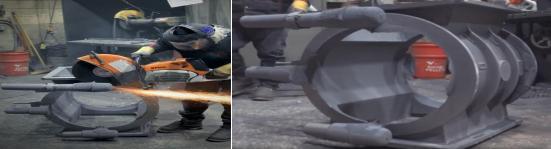
Polishing and Post-Processing Process
Conclusion and Outlook
FAL's successful case is a microcosm of additive manufacturing technology subverting the traditional mold industry. The CreatBot D1000 HS does not simply replace CNC but opens up a new, digital path for mold manufacturing. Its core value lies in:
Compressing Value Chain Time: Greatly shortening the cycle from design to product, enabling manufacturers to respond to the market faster.
Lowering the Threshold for Innovation: Making small-batch, multi-variety customized production economically feasible.
Releasing Design Potential: Breaking free from the constraints of traditional processes, allowing engineers to focus on function realization rather than manufacturing feasibility.
In the future, with the further development of materials science and deepening industry awareness, the penetration rate of additive manufacturing in the mold industry will continue to increase.
CreatBot will continue to be committed to providing more efficient, stable, and user-friendly industrial 3D printing solutions, and jointly promote a new round of intelligent manufacturing revolution with global manufacturers.


