


A global leader in automotive technology and services, Bosch has achieved a major breakthrough in rapid prototyping and low-volume end-use production of core components such as oil pumps and hydraulic valves by introducing CreatBot industrial-grade 3D printers. This has significantly shortened R&D cycles and reduced production costs, setting an industry benchmark for additive manufacturing in automotive powertrain applications.

Customer Background: A Century-Old Giant's Commitment to Quality and Innovation
Founded in 1886 and headquartered in Gerlingen, Germany, the Bosch Group is a world-leading provider of engineering technology and comprehensive industrial services. With outstanding engineering expertise and stringent quality standards, Bosch has set the benchmark in the global automotive components industry.
As the automotive industry evolves rapidly, the performance and manufacturing efficiency of core components directly determine a company's competitiveness. Take the "heart" of the engine lubrication system—the oil pump—as an example: it directly affects vehicle fuel efficiency and power performance. Faced with the trends of lightweighting and customization, Bosch urgently needs to break the efficiency and cost constraints of traditional manufacturing. Its pursuit of ultimate precision, efficiency, and design demands a more agile, flexible, and cost-effective solution to meet fast-changing market needs.
Opportunities & Challenges: Additive Manufacturing Amid Automotive Industry Transformation
Market Opportunities
- Surging global vehicle production is driving steady growth in oil-pump market demand; the oil-pump market is projected to reach US $3.8 billion by 2033.
- Explosive growth in customization requires rapid adaptation of multiple design versions for diverse application scenarios.
Pain Points of Traditional Manufacturing
- Efficiency bottleneck: Mold development for a new oil-pump model takes 6–8 weeks, and the long lead time from design freeze to mass-production delivery severely slows R&D and time-to-market.
- Cost black hole: For customized or experimental models, small-batch mold costs account for over 50 % of total expenses, dramatically increasing R&D and production costs.
- Design limitations: Traditional split casting struggles to optimize complex internal flow channels and cannot integrate lightweight structures or irregular functional parts, restricting innovation space.
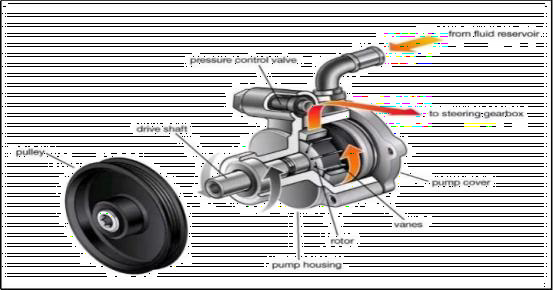
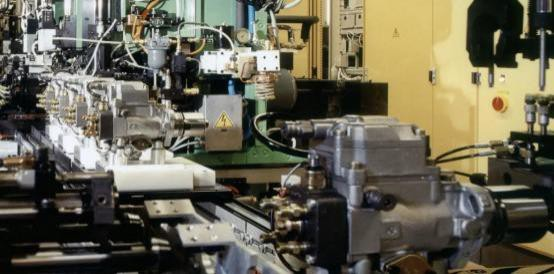
Schematic of Bosch automotive power pump
Solution: From Innovation to Implementation – CreatBot 3D Printing Delivers a Precise Breakthrough
Since 2015, Bosch has successively introduced CreatBot industrial-grade 3D printers at multiple R&D and production sites in the United States, Mexico, Germany, Vietnam, Hungary and the United Kingdom.
Phase 1: Technology Exploration (2015–2021) – First Prototype Validation
- In 2015, Bosch Rexroth USA purchased its first CreatBot DX PLUS baseline model to verify the feasibility of 3D printing for fluid-component development, slashing oil-pump design cycles from 6 weeks to 10 days.
- In 2021, the Mexico plant brought in the CreatBot PEEK-300 high-temperature printer, successfully producing end-use oil-valve bodies rated for 230 °C; meanwhile, the German headquarters conducted an in-depth evaluation of the CreatBot F1000 large-format industrial printer and launched a feasibility study on high-temperature material mass production.
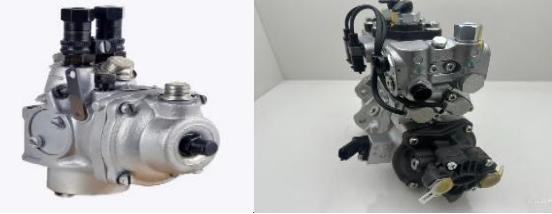
Oil-pump housing printed with 3D printer
Phase 2: Scale-up (2022–2024) – Asia-Pacific & Europe Synergy
- In 2022, the Vietnam plant deployed the CreatBot D600 industrial printer, covering 80 % of jig & fixture printing, boosting efficiency by 60 % and cutting per-unit mold cost by 87 %.
- In 2023, the German headquarters added the CreatBot PEEK-300 high-performance printer; PEEK 3D-printed end parts now account for 30 % of total production.
- In 2024, the Hungary site adopted the D600 large-format printer to achieve 48-hour rapid iteration of customized pump bodies; the German headquarters consulted on the D1000 large-format printer solution, planning an integrated print line that lifts structural performance by 32 %.
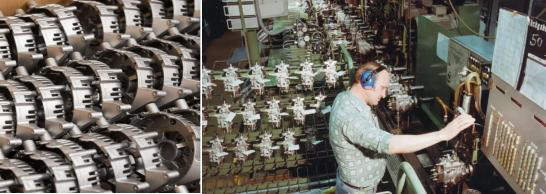
Bosch batch-produced housing models
Phase 3: Production Deepening (2025) – 3D Printing Becomes Mainstream
- In 2025, the German headquarters initiated procurement of the D600 Pro2 HS + D1000 HS large-format printers.
- In 2025, the UK subsidiary, leveraging German R&D data, evaluated the D1000 HS ultra-large industrial 3D printer for end-use core automotive parts and prototype validation, accelerating local customization and shortening validation cycles by 58 %.
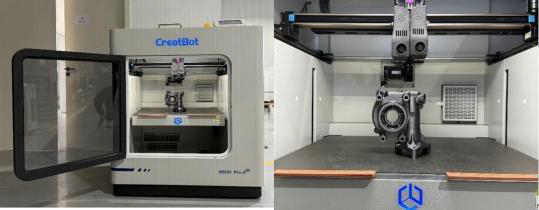
Oil-pump housing printed by Bosch with CreatBot D600 Pro2 HS
Testimonials: Recognizing the Value Behind the Technology Leap
By harnessing CreatBot 3D printing technology, Bosch has achieved a leap in manufacturing efficiency and performance innovation. This is more than an upgrade in process—it is a precise exploration of the future direction of automotive core components, setting a new industry paradigm of "technology-driven innovation".
Die-cast aluminum oil-pump housing model
"Today our developers can print five different versions of an injection valve in a single day and immediately discuss and evaluate the pros and cons of each. It's a textbook example of 3D printing entering mainstream production."
— Head of Bosch 3D Printing Competence Center
"CreatBot industrial-grade 3D printers allow us to deliver brand-new products to customers in entirely new fields within an extremely short time. 3D printing enables us to customize products and better satisfy customer needs."
— Production Director, Bosch European Plant


