


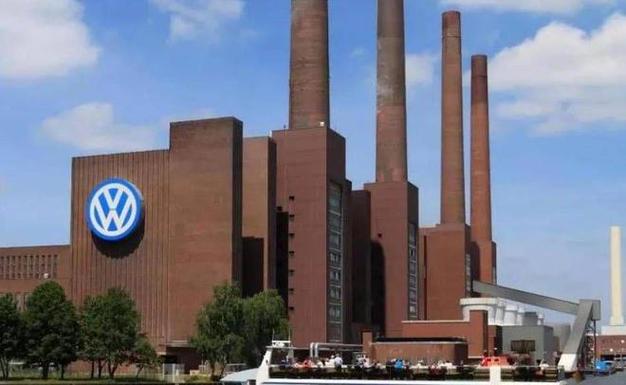
Steering the Future: CreatBot 3D Printing Empowers Volkswagen with Lightweight Design and Iterative Upgrades
As a global benchmark in the automotive industry, Volkswagen is not only a symbol of speed and passion, but also a practitioner of the sustainable mobility revolution. From classic fuel-era models to pioneering electric innovations, Volkswagen has always been committed to "driving the future," satisfying users' pursuit of excellence while advancing carbon neutrality through its "Way to ZERO" strategy. However, the limitations of traditional manufacturing in R&D cycle, cost control, and material efficiency make it difficult to meet Volkswagen Group's demands for energy-saving, environmental protection, and rapid iteration.
CreatBot industrial-grade 3D printing technology offers Volkswagen an entirely new R&D pathway: lightweight structures, green manufacturing, and rapid iterative upgrades, propelling automotive component development into a new era.
Customer Background: When Traditional Manufacturing Meets Automotive Industry's "New Must-Haves"
Volkswagen Group, founded in 1937 and headquartered in Wolfsburg, Germany, is one of the world's leading automobile manufacturers. Its portfolio includes renowned brands such as Audi, Porsche, Lamborghini, Bentley, and Bugatti, covering passenger cars, commercial vehicles, and electric vehicles.
Under the "Way to ZERO" strategy, Volkswagen continuously optimizes vehicle energy consumption and environmental performance upgrades. This is reflected not only in vehicle design but also in the development of core components. The steering wheel, as the key interface between driver and vehicle, connects driving experience, safety, and innovative design. Volkswagen urgently needs a component R&D solution that ensures high strength and safety, achieves lightweighting to extend range, and supports green manufacturing and rapid iteration.
Industry Trends & Tech Breakthrough: CreatBot 3D Printing's "Four Keys"
The global automotive industry is facing the following trends:
- Surging Demand: Electric models and high-performance sports variants (e.g., R-Line) are driving rising demand for customized components.
- Accelerated Iteration: Markets demand shorter development cycles and functional innovation, forcing component development efficiency to improve.
- Green Transformation: Lightweight and carbon-neutral goals require manufacturing processes to "cut redundancy and boost efficiency," helping automakers achieve carbon-neutral strategies.
Yet traditional manufacturing's long cycles, high costs, and low flexibility clash with the automotive industry's need for rapid iteration and green manufacturing. CreatBot industrial-grade 3D printing technology, proven in shortening R&D cycles, reducing prototyping costs, supporting complex structures, and improving material utilization, provides Volkswagen with a concrete solution.
CreatBot 3D Printing Advantages:
- Rapid Iteration: From design drawing to physical prototype in just days.
- Cost Savings: Mold-free manufacturing drastically lowers R&D costs and development time.
- Design Flexibility: Breaks traditional constraints, enabling complex geometries.
- Eco-Efficiency: Additive manufacturing minimizes waste and maximizes material usage, advancing carbon-neutral goals.
Project in Action: End-to-End Journey from Requirements to Validation
1. Requirements Definition
In April 2019, Volkswagen Group—under its "Way to Zero" carbon-neutral strategy—issued a mandate for lightweight R&D. Three targets were set: weight reduction, green manufacturing, functional integration. By 2022, Volkswagen's U.S. R&D team refined the brief, targeting the steering-wheel assembly and demanding weight savings while preserving safety and structural integrity and optimizing material usage & feature integration.
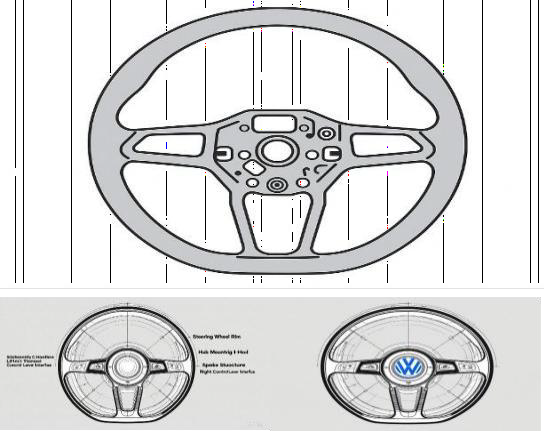
Lightweight steering-wheel design rendering
2. Technology Selection
Matching part size and precision needs, CreatBot engineers and Volkswagen R&D jointly chose the CreatBot D600 Pro2 HS industrial 3D printer for experimental builds and iterative validation. Key specs aligned perfectly:
- Build volume: 600×600×600 mm—large enough to print the entire steering-wheel skeleton in one piece, eliminating structural weakness from multi-part joints.
- High-temp printing: sealed chamber up to 70 °C plus hot-end (max 420 °C) ensures carbon-fiber-reinforced filament prints without warping or poor inter-layer adhesion.
- Material: Ultra PA-CF (high-temp polyamide carbon-fiber reinforced) delivers high strength, wear & heat resistance, dimensional stability during printing, ideal for end-use automotive parts that demand temperature tolerance, rigidity and light weight.
3. Printing & Iteration
Leveraging the D600 Pro2 HS large-format platform, the entire steering-wheel skeleton was printed as a single part, removing traditional welds or bolts that add weight and failure points, cutting assembly steps and accelerating validation cycles.
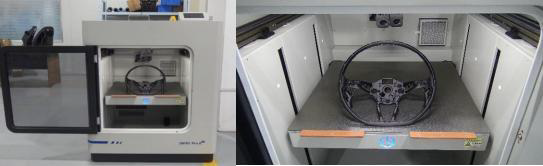
Steering-wheel printing in progress
4. Testing & Validation
Printed specimens underwent strength, stiffness and thermal tests. Results fed back into design tweaks, achieving structural optimization and optimal material utilization.
Deliverables
- Technical proof: functional steering-wheel prototype successfully produced and core performance tests passed.
- Efficiency leap: R&D cycle compressed by over 70 %, overall development cost down 50 % (material + machine wear + labor).
- Process validated: systematically confirmed the feasibility of the "rapid prototyping – lightweight design – sustainable manufacturing" pathway for 3D-printed automotive parts.
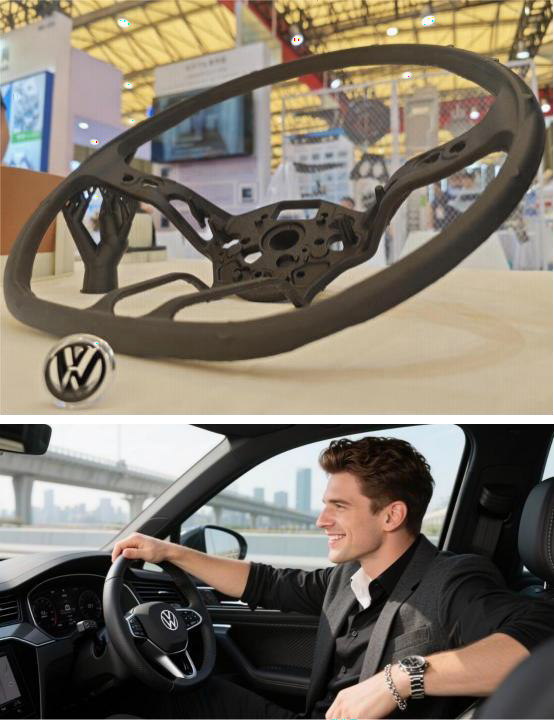
Printed Volkswagen steering wheel & application showcase
Future Outlook: CreatBot 3D Printing Will Redefine the "Imagination Boundary" of Automotive Manufacturing
CreatBot 3D-printing applications will expand to more core components:
- Functional parts: seat frames, wheel hubs, oil-pump housings, brake assemblies—enabling rapid prototyping and low-volume production.
- Lightweight parts: carbon-fiber-reinforced and high-performance engineering plastics further cut component weight, boosting vehicle energy efficiency and range.
- Personalized customization: steering-wheel grips, mirror brackets and more can be tailored to specific models and user preferences with individualized design & fast iteration.
- Green manufacturing: on-demand 3D printing slashes material waste by 90 %, accelerating the industry's green transition and upgrading the entire supply chain.
From manufacturing "constraints" to 3D-printing "liberation", CreatBot is more than a tech upgrade—it's a mindset shift. In the future, 3D printing will keep injecting lightweight, intelligent and sustainable momentum into the automotive sector—and this is only the beginning.


